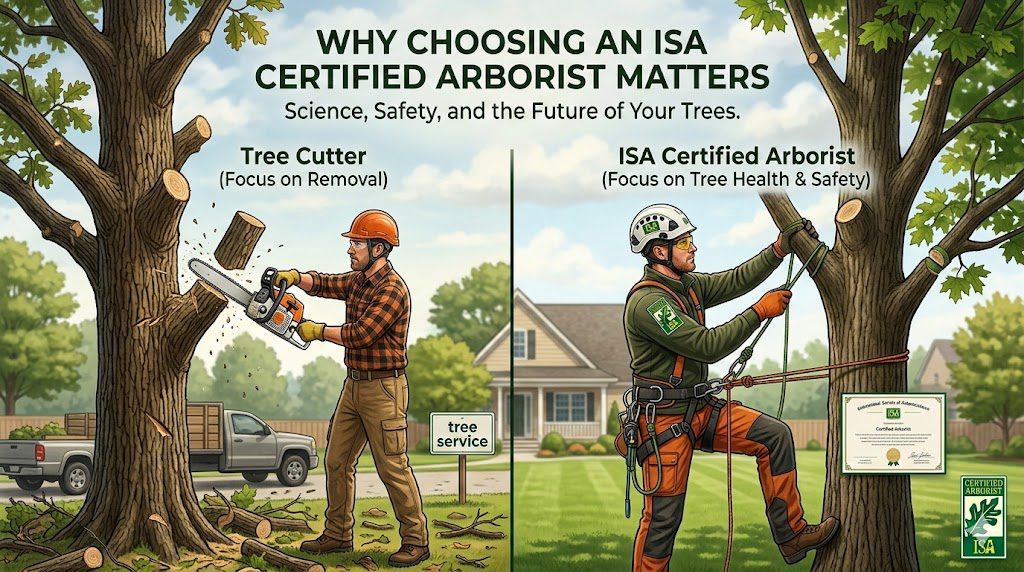
When a homeowner looks at a towering oak or a leaning pine, the primary concern is usually immediate: “Is it going to fall?” or “It’s blocking my view.” To the untrained eye, any individual with a chainsaw and a bucket truck appears capable of solving those problems. However, in the world of arboriculture, there is a vast, often dangerous gulf between a tree cutter and an ISA Certified Arborist.
Choosing a certified professional isn’t about prestige; it’s about protecting your property’s value, ensuring family safety, and respecting the complex biology of living organisms.
1. What Does “ISA Certified” Actually Mean?
The International Society of Arboriculture (ISA) is the global accrediting body for tree care. Earning the title of “Certified Arborist” is a rigorous process that requires:
- Documented Experience: At least three years of full-time, practical work experience in arboriculture.
- Academic Achievement: A degree in horticulture, forestry, or a related field can substitute for some experience, ensuring a baseline of scientific knowledge.
- The Examination: Passing a comprehensive exam covering ten “domains” of tree care, including soil management, identification, and safe work practices.
- Continuing Education: To maintain certification, arborists must earn CEUs (Continuing Education Units), ensuring they are up-to-date on the latest pest outbreaks, pruning techniques, and safety gear.
2. Biology vs. Butchery: The Science of the Cut
A tree cutter sees a limb as an obstruction. An arborist sees a limb as a vital organ. Every cut made to a tree is a wound that the tree must “codit” (Compartmentalization of Decay in Trees).
Improper techniques—like topping (cutting the top off a tree to reduce height) or lion-tailing (removing too many inner branches)—actually trigger a stress response. This results in “water sprouts”—weak, fast-growing limbs that are far more likely to break in a storm than the original branches. A Certified Arborist understands ANSI A300 standards, the industry-accepted gold standard for pruning, which dictates exactly how and where a cut should be made to encourage healing.
3. Advanced Risk Assessment and Mitigation
Tree work is inherently high-stakes. Certified Arborists are trained in Structural Assessment. They don’t just look for dead wood; they look for:
- Included Bark: Where two stems grow so close together they bark-pinch, creating a structural ticking time bomb.
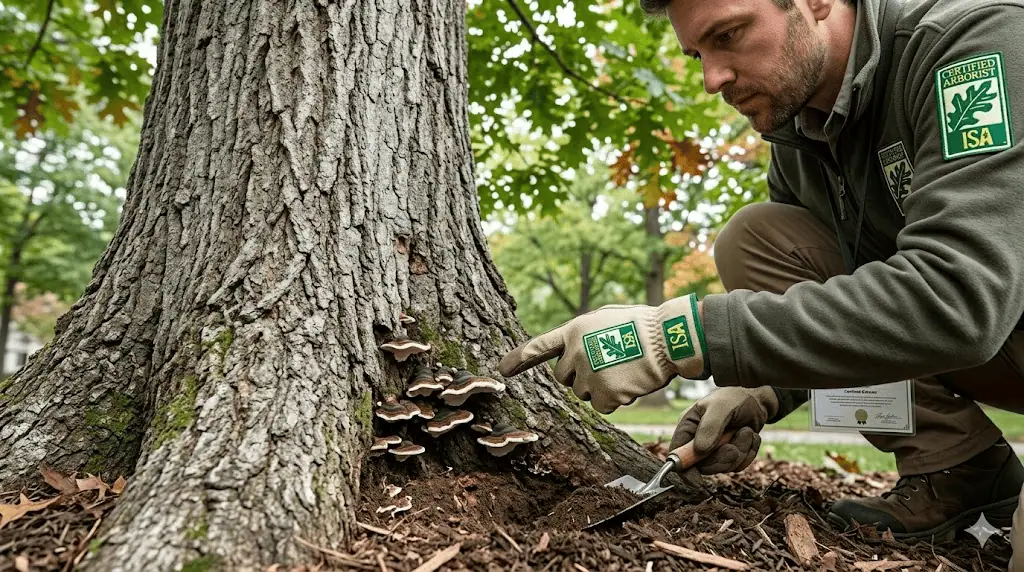
- Fungal Bodies: Mushroom growth at the base (conks) can indicate internal root rot that isn’t visible on the outside.
- Soil Compaction: Understanding how construction or heavy machinery affects the “Critical Root Zone.”
4. Financial and Legal Accountability
Hiring an uncertified “guy with a truck” often seems cheaper upfront, but the long-term liabilities are massive. ISA Arborists are bound by a Code of Ethics and are significantly more likely to carry the two essential types of coverage:
- General Liability: Protects your home and assets if a limb falls the wrong way.
- Workers’ Compensation: Protects you from being sued if a worker is injured on your property.
Comparison: Tree Cutter vs. ISA Certified Arborist
The Bottom Line: Protecting Your Investment
Trees are one of the few assets on a property that actually increase in value as they age—provided they are healthy. One bad pruning job by an amateur can strip 20 years off a tree’s life and turn a beautiful canopy into a liability.
When you hire an ISA Certified Arborist, you aren’t just paying for someone to start a chainsaw. You are paying for a professional diagnosis, a strategic plan, and the peace of mind that your landscape is in expert hands.
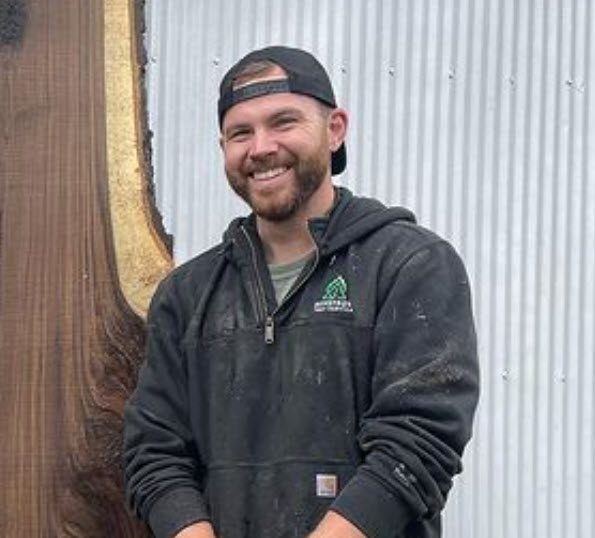
Erik Renstrom
For over a decade, Erik Renstrom, along with his company Renstrom Tree Service have been servicing the Minneapols / St. Paul area, helping home owners and businesses with their trees. Whether you have a tree that has fallen on your house or need storm damage cleanup, we are here for you, 24-7. Call Erik today! (651) 363-9616