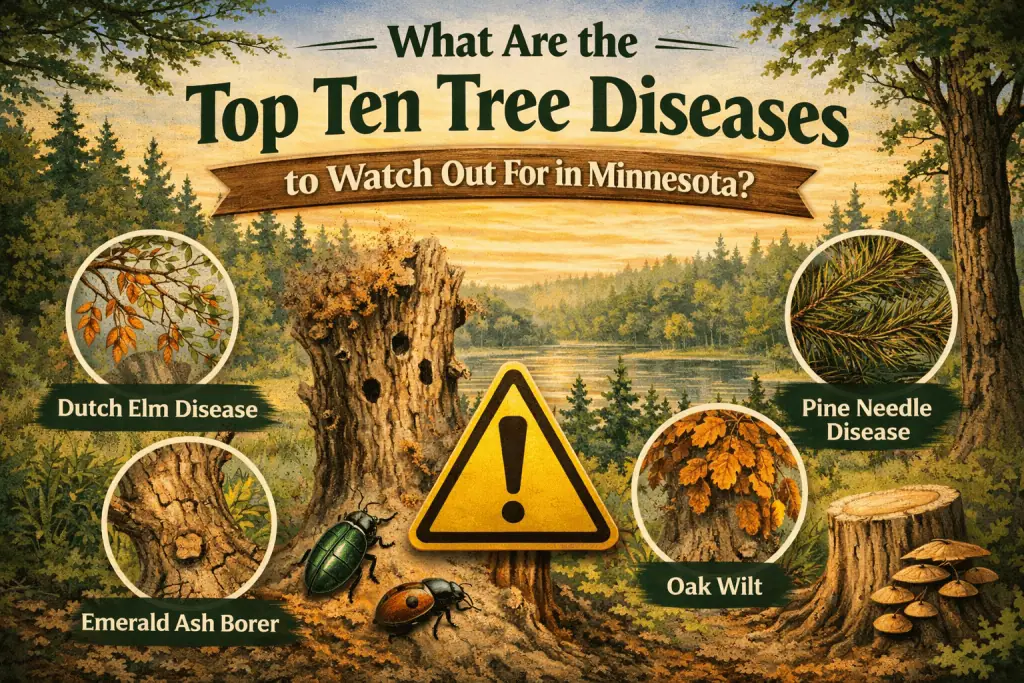
Minnesota’s diverse climate and ecosystems support a wide variety of tree species — but with this diversity comes susceptibility to disease and pests. Understanding the most common threats can help homeowners protect their trees and landscape investments.
Here are ten diseases and pests commonly affecting Minnesota trees:
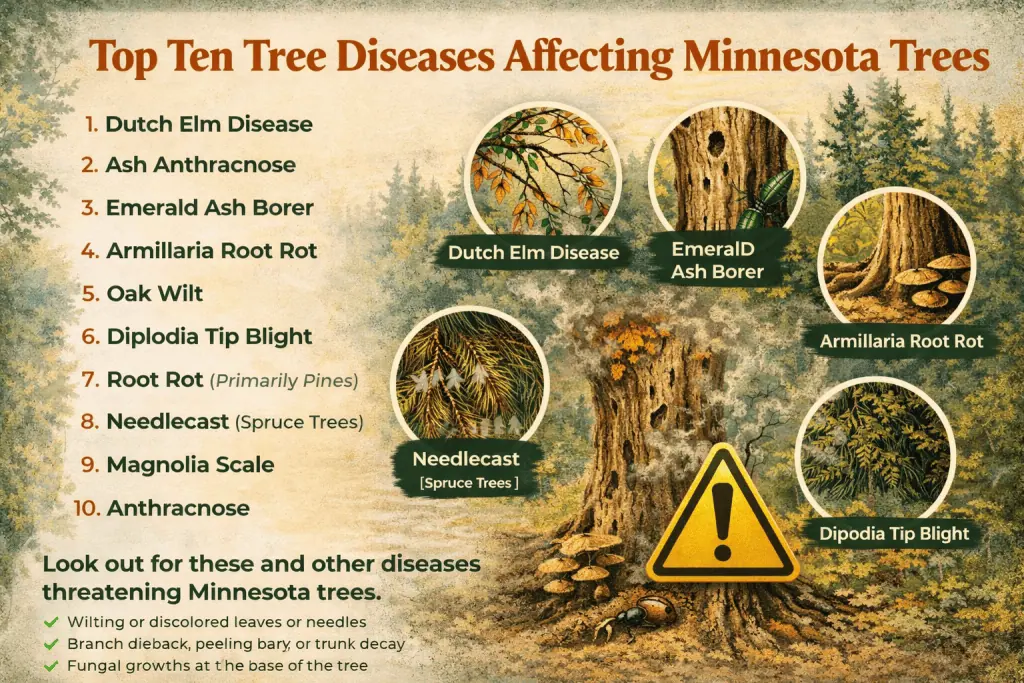
- Dutch Elm Disease – Caused by the fungus Ophiostoma novo-ulmi and spread by elm bark beetles. This disease can quickly kill American elm trees, leading to leaf wilting and branch dieback.
- Oak Wilt – A fungal disease affecting primarily red oaks. Infected trees show leaf discoloration, wilting, and may die within the same season.
- Emerald Ash Borer (EAB) – An invasive beetle that has devastated ash trees across Minnesota. Signs include canopy thinning, bark splitting, and D-shaped exit holes.
- Apple Scab – A fungal disease that affects apple and crabapple trees, causing dark leaf spots, premature leaf drop, and reduced fruit production.
- Fire Blight – A bacterial infection affecting apple, pear, and related trees. It causes blackened, wilted branches, giving the appearance of fire damage.
- Pine Wilt – Caused by the pine wilt nematode and spread by the pine sawyer beetle. Primarily affects non-native pines like Scotch pine and can kill trees rapidly.
- White Pine Blister Rust – A fungal disease requiring two hosts: white pines and currants/gooseberries. Leads to stem cankers and potentially tree death.
- Magnolia Scale – An insect pest that sucks sap from magnolias, weakening trees and causing branch dieback and reduced flowering.
- Needlecast (Spruce Trees) – A fungal disease affecting spruce trees. Needles discolor, brown, and drop prematurely, weakening the tree and making it more vulnerable to winter injury.
- Anthracnose – A common fungal disease affecting ash, oak, maple, and sycamore. Symptoms include leaf spots, cupping or distortion, and premature leaf drop.
Signs Your Tree May Be Affected
- Discolored or prematurely dropping leaves or needles
- Wilting branches or dieback
- Fungal growths on leaves, stems, or trunks
- Unusual thinning of the canopy
- Insect infestations or sticky sap
Protecting Your Trees
- While some tree diseases can be managed with cultural practices or treatments, many require professional assessment. Certified arborists can:
- Identify early signs of disease or pest infestations
- Perform safe pruning or removal to prevent spread
- Offer treatments or preventative care for vulnerable species
- Advise on tree selection and placement to reduce future risk
Erik Renstrom
For over a decade, Erik Renstrom, along with his company Renstrom Tree Service have been servicing the Minneapols / St. Paul area, helping home owners and businesses with their trees. Whether you have a tree that has fallen on your house or need storm damage cleanup, we are here for you, 24-7. Call Erik today! (651) 363-9616