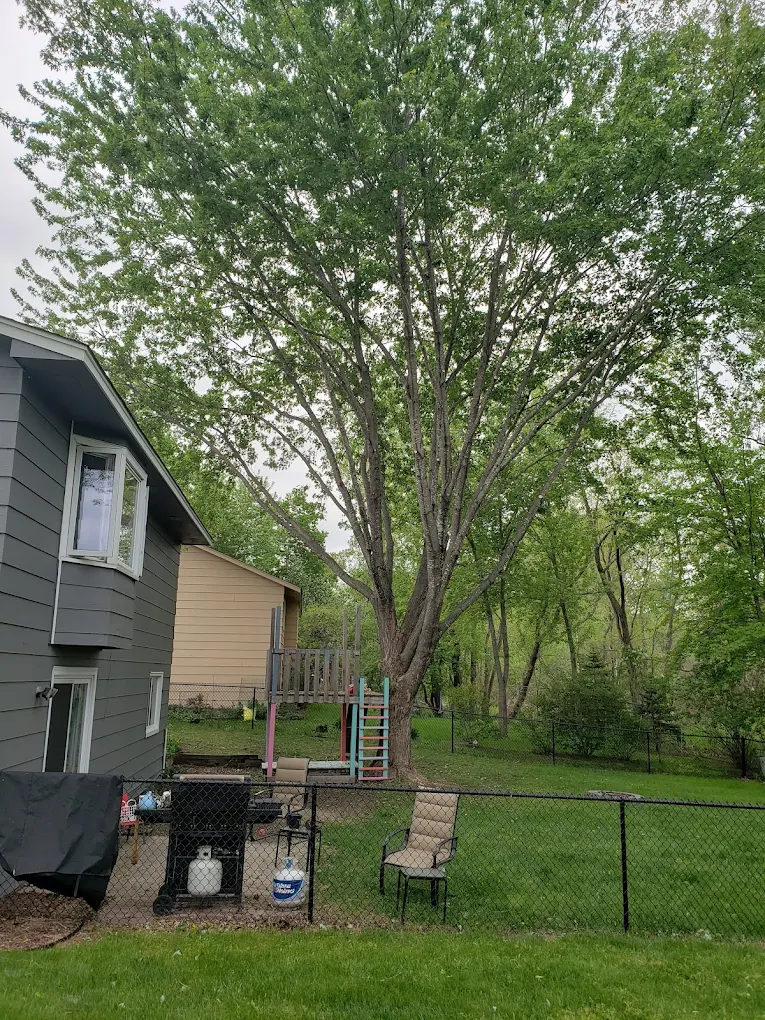
A neighbor’s tree overhanging your property can create an awkward situation. The branches may drop leaves and debris into your yard, shade your garden, rub against your roof, or become a concern during storms. At the same time, you probably do not want a tree issue to turn into a dispute with your neighbor.
The concern becomes more serious when an overhanging branch is cracked, weakened, or positioned above a home, fence, driveway, or other structure. A limb that caused no problems last year may become hazardous after heavy snow, strong winds, or another Minnesota storm.
Knowing what you can do and when professional help makes sense can make the situation easier to handle. This guide covers practical steps for White Bear Lake, MN homeowners, including trimming considerations, documentation, neighbor communication, and warning signs that need immediate attention.
Can You Trim Branches That Cross Your Property Line?
Property owners can generally trim branches that extend onto their property, but the work should not unnecessarily damage or destabilize the tree. This means trimming should usually stop at the property line rather than extending onto the neighbor’s property.
Before cutting anything, document where the branches cross the property line. Take clear photos from several angles and keep a record of any existing damage or concerns.
Large branches require more caution. Removing a major limb can affect the balance and health of the entire tree, especially when the cut is close to the trunk. If climbing, specialized equipment, or substantial pruning is required, having a professional evaluate the tree first is the safer choice.
Renstrom Tree Service’s arborist consultation can help homeowners determine how an overhanging branch can be managed without creating another tree problem.
What to Do When a Neighbor’s Tree Becomes a Safety Concern
Start by looking for signs that the overhanging branches present more than a routine maintenance issue. Cracked limbs, hanging branches, deadwood, or branches resting against a roof or other structure deserve prompt attention.
Take photos from a safe location and keep people, pets, and vehicles away from the area if a large limb appears unstable. Do not stand beneath a damaged branch while inspecting it.
An ISA Certified Arborist can evaluate whether the tree needs routine pruning or presents a structural hazard. This professional assessment can also provide useful documentation if you need to discuss the issue with your neighbor, insurer, or another party.
If a dangerous limb has already failed or poses an immediate threat, Renstrom Tree Service’s emergency tree service provides help for urgent tree hazards.
Who Is Responsible When a Neighbor’s Tree Causes Damage?
Responsibility for damage is not always determined simply by who owns the tree. The circumstances surrounding the failure can matter.
For example, a healthy tree that unexpectedly falls during severe weather presents a different situation from a tree that had obvious decay or structural problems before it failed. Previous knowledge of a hazardous condition can become important when responsibility is evaluated.
If you have concerns before damage occurs, document them. Keep dated photos, arborist assessments, and copies of written communication with your neighbor.
If damage does happen, photograph the tree and affected property before cleanup begins when it is safe to do so. Keep repair estimates, inspection reports, and related correspondence together.
Questions involving liability can depend on the specific circumstances and applicable law, so an arborist can document the tree’s condition, but legal or insurance questions may require guidance from the appropriate professional.
How to Talk to Your Neighbor About an Overhanging Tree
Start with a calm conversation. Explain what you have noticed and focus on the specific concern rather than blaming your neighbor.
Showing photos can make the issue easier to understand. For example, pointing out a cracked branch hanging above your garage gives both homeowners something specific to discuss.
If your neighbor is open to addressing the problem, you can discuss having the tree professionally evaluated. Targeted pruning may be enough to create clearance and reduce the hazard without removing the entire tree.
What if your neighbor does not agree that there is a problem? Put your concerns in writing. A dated email or letter describing the issue creates a record and gives your neighbor an opportunity to respond.
An independent arborist assessment can also help keep the conversation focused on the condition of the tree rather than disagreements between property owners.
When an Overhanging Tree Needs Emergency Attention
Some tree problems should not wait for a routine appointment. A large branch actively separating from the tree, a newly leaning tree, a split trunk, or major storm damage can indicate an immediate hazard.
Branches resting on a home or other structure also require caution. If any part of the tree is touching a power line, stay away and contact the appropriate utility provider. Do not attempt to cut or move the branch yourself.
Minnesota snow, ice, and storms can place additional weight on already weakened branches. A damaged limb that remains suspended after severe weather may still fall later.
Renstrom Tree Service’s guidance on emergency storm response provides additional information about warning signs homeowners can watch for.
Be Careful With Roots Crossing the Property Line
Overhanging branches are not the only part of a neighbor’s tree that can cross property boundaries. Roots can extend beneath lawns, driveways, sidewalks, fences, and other landscape features.
Cutting major roots without understanding their role can destabilize the tree. Structural roots help anchor a mature tree, and removing too much of the root system can increase the risk of decline or failure.
If roots appear to be lifting pavement or affecting another structure, document the problem and have the tree evaluated before cutting. An arborist can assess the size and location of the roots and explain whether pruning them presents a risk to the tree.
This becomes particularly important when the tree is large enough to reach your home or neighboring structures if it fails.
Document Tree Problems Before They Get Worse
Good documentation can make communication, insurance questions, and future decisions much easier. Start by taking dated photos that clearly show the branch, tree, property line, and anything potentially at risk.
Take additional photos after major storms if the tree’s condition changes. A sequence of images can show whether a crack has widened, a tree has started leaning, or a branch has moved closer to a structure.
Keep copies of emails or letters exchanged with your neighbor. If an arborist inspects the tree, save the written assessment along with estimates or recommended work.
Documentation does not need to become confrontational. It simply creates a clear record of what was observed and what steps were taken.
Why an Arborist Assessment Can Help Resolve the Issue
Tree disputes can become difficult when two property owners have different opinions about whether a tree is dangerous. An arborist can provide a more objective assessment based on the tree’s condition.
The evaluation may include the trunk, branch unions, canopy, visible root system, decay, deadwood, and signs of previous storm damage. The arborist can then explain whether pruning, monitoring, or another form of tree care is appropriate.
This is especially useful when removing an overhanging limb could affect the stability or health of the entire tree. Professional guidance can help avoid turning a manageable branch problem into a hazardous tree.
Related Resources for Overhanging Trees
For more information, review Renstrom Tree Service’s arborist consultation page and emergency tree service resource. These pages provide additional information about professional tree evaluations and urgent tree hazards.
You can also review Renstrom Tree Service’s emergency storm response guidance for warning signs to watch for before and after severe weather.
For independent information, the University of Minnesota Extension provides guidance on storm-damaged landscape trees and recommends professional evaluation when tree damage presents safety concerns.
Frequently Asked Questions
1. Who Is Responsible if My Neighbor’s Tree Falls on My Fence?
Responsibility depends on why the tree or branch failed and the circumstances before the incident. A healthy tree that unexpectedly fails during severe weather may be treated differently from a tree with known structural problems.
Take photos of the tree and damage and keep any previous communication or professional assessments. Renstrom Tree Service can evaluate and document tree conditions in White Bear Lake, MN, but questions about financial or legal responsibility should be addressed with your insurer or an appropriate legal professional.
2. Can I Remove Tree Roots That Are Damaging My Driveway?
Cutting major tree roots can affect the health and stability of the entire tree. Removing a structural root near the trunk can create a safety concern even when the root has crossed onto your property.
Renstrom Tree Service can assess problematic roots in White Bear Lake, MN and explain whether root pruning is appropriate. An evaluation is especially important when the tree is large or close to buildings.
3. What if My Neighbor Refuses to Trim a Dangerous Branch?
Document the condition with dated photographs and communicate your concerns in writing. If possible, obtain a professional assessment that explains the condition of the branch or tree.
If the issue remains unresolved, check applicable local requirements and consider appropriate professional or legal guidance before taking major action. Avoid making cuts that could destabilize or seriously damage the tree.
4. How Should I Document a Tree Problem for Insurance Purposes?
Take dated photographs from several angles and keep copies of correspondence with your neighbor. Save arborist reports, repair estimates, and photographs showing any changes in the tree’s condition.
If damage occurs, contact your insurer for instructions about documentation and claims. Renstrom Tree Service can provide professional tree assessments in White Bear Lake, MN when information about the tree’s condition is needed.
Conclusion
A neighbor’s tree extending onto your property does not have to become a conflict. Start by documenting the branches or roots involved, talk with your neighbor, and avoid making major cuts that could damage or destabilize the tree.
Safety comes first when a branch is cracked, hanging, resting against a structure, or showing other signs of failure. In those situations, keep people away and have the tree professionally evaluated.
Understanding the condition of the tree before taking action can help protect your property while keeping the situation with your neighbor as straightforward as possible.
Get Professional Tree Advice in White Bear Lake, MN
Renstrom Tree Service provides professional tree assessments for homeowners in White Bear Lake, MN dealing with overhanging branches, hazardous trees, and other property-line concerns. If you are unsure whether a neighboring tree needs pruning or presents a safety risk, contact the team to schedule an evaluation. A professional assessment can help you understand the tree’s condition and decide on a practical next step.