
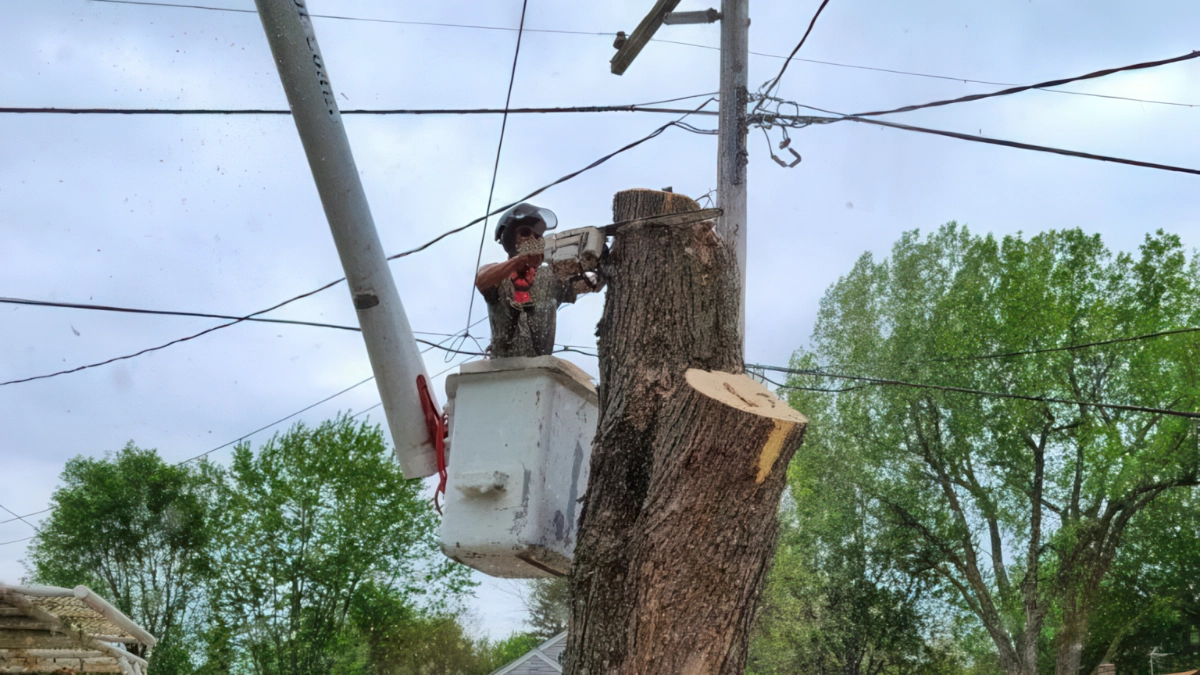
Summer storms in Minnesota are notorious for their sudden intensity, bringing high winds, heavy rain, and lightning to the Twin Cities. When the weather clears, homeowners in White Bear Lake, Lake Elmo, and surrounding areas are often left dealing with the aftermath. One of the most dangerous situations you can face is a tree or large branch that has fallen near or directly onto a power line. Handling this situation requires extreme caution and immediate professional intervention. This guide explains exactly what you should do to protect your property and your family when a storm compromises trees near electrical lines.
Recognize the Immediate Danger
A tree leaning on a power line is an active, life-threatening hazard. Electricity can travel through the moisture in the tree’s wood, turning the entire trunk, branches, and even the surrounding ground into an electrical conductor. You do not have to touch the wire directly to be electrocuted; touching the tree itself can be fatal.
Never assume a downed line is a harmless telephone or cable wire, and never assume a power line is dead simply because the power is out in your home. Always treat any wire, and any tree in contact with a wire, as fully energized and highly dangerous.
Secure the Area and Make the Right Calls
If you discover a tree tangled in a power line, your first step is to secure the area. Keep all family members, neighbors, and pets far away from the tree. A safe distance is generally considered to be at least thirty feet, as electricity can arc or travel through wet ground.
Next, you must contact your local utility company immediately. The utility company is responsible for shutting off the power grid to that specific line. Do not attempt to call a tree service before the utility company has been notified, as no reputable tree company will begin work until the electrical hazard has been neutralized by the utility provider.
When to Call an Emergency Tree Service
Once the utility company has secured the power line and confirmed that the electricity is shut off, it is time to call a professional emergency tree service. While the utility company handles the electrical hazard, they generally do not perform complete tree removal or debris cleanup on private property.
A qualified tree service will assess the structural stability of the tree and determine the safest way to remove it without causing further damage to your home or landscape. In communities like Roseville and Stillwater, prompt removal is essential to restore access and safety to your property.
Why Professional Equipment is Required
Removing a storm-damaged tree from near a power line is not a job for a chainsaw and a ladder. The tree is often under immense tension, and cutting the wrong branch can cause the trunk to snap back unpredictably.
Professional emergency tree services use advanced rigging techniques and, when necessary, crane assistance to lift heavy sections of the tree safely away from structures and utility infrastructure. An ISA Certified Arborist leading the crew ensures that the removal is planned carefully, executed with precision, and completed with full debris cleanup.
What Not to Do Near a Downed Line
Do not try to pull a branch away with a rope, vehicle, pole, or ladder. Even a seemingly small tree limb can shift a power line, create an arc, or transfer electrical current to the object you are holding. Spraying the area with water, attempting to cut the tree, or moving a fence that touches the tree can also create a serious hazard.
Stay away from puddles, wet grass, and metal objects in the immediate area. If someone is inside a vehicle that has come into contact with a line, they should remain inside unless there is an immediate danger such as fire. The safest response is to keep everyone back and wait for instructions from emergency responders or the utility company.
Why Storm-Damaged Trees Behave Differently
A storm can leave a tree under enormous internal tension. A broken limb may be held up by another branch, a trunk can be partially split while still standing, and roots can be loosened without the tree falling immediately. These conditions can change rapidly as wind shifts, water drains, or the wood dries out.
Professional crews assess where the weight is being held, which limbs are compressed, and how the tree can be dismantled without releasing energy unpredictably. This planning is why emergency tree work is not comparable to ordinary yard cleanup. It requires specialized techniques, equipment, and communication among the crew.
Document Damage From a Safe Location
After you have secured the area, it can be helpful to take clear photographs from a safe distance. Capture the full tree, any damaged structures, and the relationship between the tree and utility line. Avoid stepping into the hazardous zone to get a closer image.
These photos can help the utility provider, tree service, and insurance representative understand the situation. Keep a simple record of the date, time, and weather event as well. Documentation should never take priority over personal safety, but a few safe photos can make the next steps more efficient.
Plan for the Next Storm Before It Arrives
The best time to reduce storm risk is before dark clouds are on the horizon. Regular inspection of large trees near a house, driveway, or utility corridor can uncover deadwood, weak branch unions, or overextended limbs that may be managed proactively.
Ask an arborist to identify trees that would benefit from structural pruning or a formal risk assessment. A little preventive care may reduce the amount of debris, damage, and disruption you face during future Minnesota storms.
Keep Neighbors and Access Routes in Mind
Storm damage rarely respects property lines. A tree near a shared driveway, sidewalk, alley, or neighboring home can affect more than one household. After you have contacted the utility company and secured your own family, let nearby neighbors know about the hazard from a safe distance. This is particularly important if the damage blocks access, affects a shared lane, or leaves a tree leaning toward another property.
Professional crews can coordinate the removal plan around access, parked vehicles, and the safest work zone. Clear communication helps prevent people from entering the area while crews are working and allows the site to be restored more efficiently once the electrical hazard is addressed.
Creating a Safer Plan Before the Next Storm
A tree near a power line deserves attention before bad weather arrives, not after a branch has already failed. Start by looking for limbs that are encroaching toward the line, signs of dieback in the upper canopy, or trees that have begun to lean toward the utility corridor. Even a branch that is not touching a line can become a serious concern if wind, ice, or heavy rain causes it to move unexpectedly.
The safest response is to keep people, ladders, tools, and equipment away from any line or tree that could contact a line. Utility-related tree work requires the right coordination and specialized procedures. Homeowners should never attempt to cut, pull, or move a branch near a power line themselves. A qualified tree professional can help evaluate the tree and explain the appropriate next step, while the utility provider remains responsible for its equipment and any immediate electrical hazard.
Planning ahead also improves the quality of non-emergency tree care. Once a hazardous clearance issue is identified, the work can be scheduled with proper access, crew positioning, traffic considerations, and property protection in mind. That is safer for the household and more likely to result in a measured pruning decision instead of a rushed reaction after a storm.
Frequently Asked Questions
1. What should I do if a tree falls on a power line?
Stay at least thirty feet away, keep others away from the area, and call your local utility company immediately to report the hazard.
2. Will the utility company remove the fallen tree?
Utility companies will clear the tree from the power line to restore electricity, but they typically leave the wood and debris on your property for you to handle.
3. Can I cut branches that are close to a power line myself?
No. Never attempt to trim or cut branches near a power line. Only trained professionals with specialized safety equipment should perform this work.
4. How fast can an emergency tree service respond?
Professional emergency tree services operate 24/7 and prioritize high-risk situations, responding as quickly as possible once the utility company has secured the power.
5. Should I call 911 for a tree on a power line?
Call 911 if there is an immediate threat to life, fire, blocked roadway, or an emergency that requires first responders. In other cases, report the electrical hazard to the utility company and stay well clear while following its instructions.
6. What if a tree is near a power line but not touching it?
Do not attempt to trim it yourself. Contact the utility company or a qualified tree professional so the situation can be assessed safely and the appropriate clearance procedure can be followed.
Conclusion
A tree compromised by a storm near a power line is a serious emergency that requires strict safety protocols. By keeping your distance, contacting the utility company first, and relying on a professional emergency tree service for the removal, you can resolve the hazard safely. Never underestimate the danger of electricity and storm-damaged wood.
Ready to Protect Your Property?
If a storm has left a dangerous tree on your property, do not wait. Renstrom Tree Service provides 24/7 emergency tree removal across White Bear Lake, Lake Elmo, and the northeast Twin Cities metro. Once your utility company has secured the power, contact us for safe, expert removal and complete cleanup.