If you’ve been trying to figure out tree felling costs before calling a company, you’re probably already confused by the fact that different websites use “tree felling” and “tree removal” like they mean the same thing. They don’t. And that difference matters a lot, both for how the work gets done on your property and what you’ll end up paying for it.
What Is Tree Felling?
Tree felling is the process of cutting a tree at its base and letting it fall in a controlled direction. One or two cuts, the tree comes down, and the crew processes the trunk and branches on the ground. That’s the whole method.
It’s the simplest and fastest way to bring down a tree. Because it’s fast, it’s also generally less expensive than other methods. But the speed and simplicity come with a hard requirement: you need a clear, unobstructed drop zone in the direction the tree will fall. A good rule of thumb is that the drop zone needs to be at least one and a half times the height of the tree. For a 60-foot oak, that’s 90 feet of open space in the fall direction.
Felling works well when a tree is standing in an open yard, a field, or a rural lot with nothing in the way. The crew will assess the tree’s natural lean, check the root structure, and factor in wind conditions before making a cut. When the conditions are right, it’s efficient and straightforward.
What Is Tree Removal?
“Tree removal” is the broader term that covers every method of taking down a tree, including felling. But when a tree service company uses the phrase “tree removal” in a quote for a suburban property, they almost always mean sectional removal.
Sectional removal means the crew works from the top down. They climb the tree or use a bucket truck, cut the tree in sections, and use ropes and rigging to control exactly where each piece lands. This is the method used when there’s no safe drop zone, which is most of the time in a neighborhood like those across White Bear Lake, Mahtomedi, or St. Paul’s east side. Homes, fences, driveways, power lines, and neighboring properties all eat up that drop zone fast.
Because sectional removal takes more time, more crew hours, and a higher level of technical skill, it costs more than a straight fell. That’s not a markup. It’s just a reflection of the actual work involved. Some removals also require crane assistance to safely extract large sections from tight spaces, which adds to the complexity and the cost.
Which Method Is Right for Your Situation?
The right method depends entirely on the conditions around your tree, not on which one you’d prefer to pay for. Felling is appropriate when the tree is in an open area with no structures, power lines, or other obstacles within the fall radius. The tree also needs to be structurally sound enough to fall predictably, which isn’t always the case.
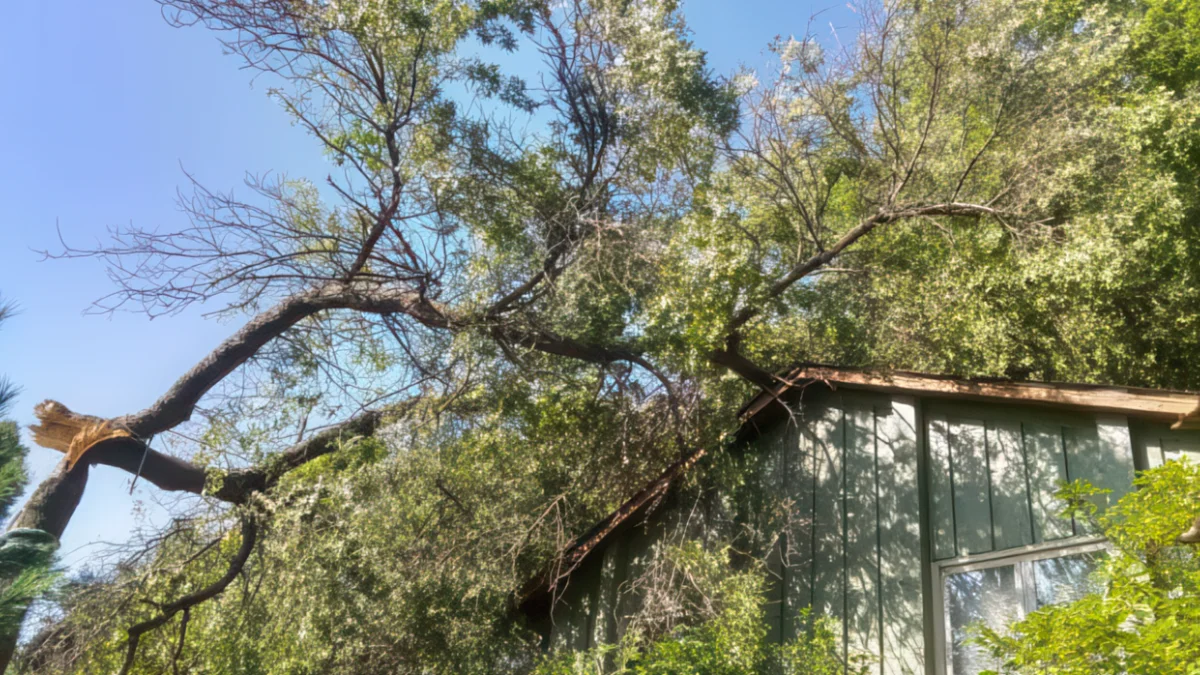
Sectional removal is required in a long list of situations. If the tree is close to your house, garage, or fence, sectional is the answer. If there are power lines anywhere near the fall radius, sectional is the answer. If the tree is dead, diseased, or showing signs of internal decay, felling becomes unpredictable and dangerous, so sectional removal is the safer call. Large trees with uneven canopies or unusual lean patterns also fall into this category.
Here’s the thing: in the northeast Twin Cities and East Metro, most residential properties have mature trees growing close to homes and structures. Oaks, elms, and ash trees in neighborhoods like Lake Elmo, Stillwater, and Roseville often have canopies that spread over rooflines and driveways. For the majority of homeowners in these areas, sectional removal isn’t just the professional recommendation. It’s the only safe option.
Does Tree Felling Actually Cost Less?
Yes, tree felling is generally less expensive than sectional removal. But that answer comes with important context. The cost savings only exist if felling is actually the right method for your specific tree and property. If the conditions don’t support felling and a crew tries it anyway, the cost of the resulting property damage will far exceed any savings on labor.
A professional arborist assesses the tree, the surroundings, and the conditions before recommending a method. That assessment drives the method, and the method drives the cost. Homeowner preference doesn’t change the physics of where a 70-foot tree will land if it’s cut at the base.
(And just to be direct here: if a company quotes you a low price for felling a tree that’s clearly too close to your house, that’s not a deal. That’s a warning sign.) According to the Tree Care Industry Association, tree work consistently ranks among the most dangerous occupations in the country, and a significant portion of serious incidents involve trees that fell unpredictably during removal. Proper assessment before any cut is made is what separates a professional crew from a liability waiting to happen.
What About the Work After the Tree Is Down?
Whether a tree was felled in one piece or taken down in sections, the work isn’t finished when the last cut is made. The crew still needs to remove branches, cut the trunk into manageable sections, and chip or haul away the debris. That cleanup is part of the total job cost regardless of which removal method was used.
It’s worth asking specifically what’s included in any quote you receive. Some companies quote the takedown and leave the cleanup as a separate line item. Others include full debris removal in the base price. You want to know exactly what you’re getting before you agree to anything.
One thing to know about Renstrom: stump grinding is not a service they offer. If stump removal matters to you, you’ll want to coordinate that separately with a stump grinding company. That’s true whether the tree was felled or sectionally removed.
Should You Try to Do This Yourself?
Tree felling is one of the most dangerous DIY projects a homeowner can attempt. The U.S. Bureau of Labor Statistics consistently reports logging and tree work among the highest fatality rates of any occupation, and those statistics include experienced professionals with proper equipment. For a homeowner without that training, the risks are even higher.
Even in an open backyard, a tree can fall in an unexpected direction. Internal decay that’s invisible from the outside, uneven weight distribution in the canopy, or a sudden shift in wind can all cause a tree to behave differently than anticipated. The equipment required to do this safely, including the right chainsaw, felling wedges, ropes, and personal protective equipment, is not gear most homeowners own or know how to use correctly.
And beyond the physical risk, there’s the liability question. If something goes wrong and the tree lands on your neighbor’s fence, car, or roof, you’re looking at a property damage claim with no professional insurance behind it. The money saved on labor disappears quickly when that conversation starts.
What to Ask Before You Hire Anyone
When you’re getting quotes for tree work in the Twin Cities area, a few specific questions will tell you a lot about the company you’re talking to. First, ask which method they plan to use for your specific tree and why. A professional crew will be able to explain the reasoning based on the conditions they’ve assessed. If they can’t explain it, that’s a problem.
Ask what’s included in the quote. Debris removal, cleanup, the specific scope of work. Get that in writing. Also ask whether the crew is licensed, bonded, and insured, and ask to see proof. In Minnesota, tree work companies should carry liability insurance and workers’ compensation coverage. If a crew is working on your property without that coverage, any injury that happens becomes your exposure.
For technical work, large trees, or hazardous situations, ask whether the company has an ISA Certified Arborist on staff. The International Society of Arboriculture sets the professional standard for tree care, and ISA certification means the person assessing your tree has met a recognized benchmark for knowledge and skill. You can learn more about what ISA Certified Arborists do and why it matters at the International Society of Arboriculture’s website at isa-arbor.com.
Renstrom Tree Service’s professional tree removal and tree felling services in the Twin Cities are built around exactly this kind of assessment-first process. The crew evaluates the tree, the conditions, and the property before any method is recommended, and they walk you through the reasoning so you understand what’s happening and why.
Minnesota-Specific Factors That Affect the Decision
The Twin Cities and East Metro present specific conditions that influence tree removal decisions. Minnesota’s freeze-thaw cycles, where temperatures swing hard in both directions from October through April, create internal stress in tree trunks that can lead to hidden decay. A tree that looks healthy from the outside may have compromised structural integrity inside. This is particularly common in older oaks and ash trees, which are widespread across Ramsey and Washington County.
The ash borer situation has also left a lot of structurally weakened ash trees standing across the region. Dead or dying ash trees are unpredictable when felled because the wood can be brittle and the decay pattern uneven. These trees almost always require sectional removal with rigging, and sometimes crane assistance, to be brought down safely.
Northeast Twin Cities neighborhoods like those in White Bear Lake, Grant, and Dellwood tend to have large, established lots with mature tree canopies that developed over decades. That maturity is part of what makes these properties beautiful. It’s also what makes tree removal more technically demanding. The trees are big, the canopies spread wide, and the homes are often right underneath them.
For work involving these kinds of conditions, Renstrom’s hazardous tree removal and crane-assisted tree services are designed specifically for the technical complexity that comes with large, mature trees in tight residential spaces.
Frequently Asked Questions
Is tree felling the same as tree removal?
No, and this is a question we get a lot at Renstrom Tree Service. Tree felling refers specifically to cutting a tree at the base and letting it fall. Tree removal is the broader term that covers all methods of taking a tree down, including felling and sectional removal. When most companies in the Twin Cities area quote “tree removal” for a residential property, they’re usually talking about sectional removal, where the tree is cut down from the top in pieces. It depends entirely on the conditions around the specific tree.
Which costs less, tree felling or tree removal?
Tree felling is generally less expensive because it takes less time and fewer crew hours. But here at Renstrom Tree Service, we tell every homeowner in the Twin Cities area the same thing: the method that costs less is only valid if it’s actually safe for your property. Attempting to fell a tree that should be sectionally removed is how property damage happens. The cost comparison only matters if both methods are actually on the table, and for most residential properties in areas like White Bear Lake and Mahtomedi, sectional removal is the only safe choice.
How do I know which method my tree needs?
You don’t, and that’s not a criticism. It’s just not something a homeowner can determine from a visual look at the tree. At Renstrom Tree Service, our ISA Certified Arborist assesses the tree’s structure, the surrounding conditions, the fall radius, and any obstacles before recommending a method. We serve homeowners across the northeast Twin Cities including Lake Elmo, Stillwater, Roseville, and Woodbury, and every property is different. The assessment is what drives the recommendation, not a standard formula.
Is tree felling dangerous to do yourself?
Yes, it’s genuinely dangerous, and we want to be straight with you about that. Tree felling is one of the leading causes of serious injury in DIY home projects. Even experienced professionals working for companies like Renstrom Tree Service follow strict safety protocols on every job across our Twin Cities service area, because trees behave unpredictably. Internal decay, uneven canopy weight, and wind shifts can all change where a tree falls. Without proper training, the right equipment, and the ability to read a tree’s structure, the risk is significant.
What questions should I ask before hiring a tree service in the Twin Cities?
Ask which method they plan to use and why. Ask what’s included in the quote, specifically whether debris removal and cleanup are covered. Ask whether the crew is licensed, bonded, and insured, and ask to see documentation. And ask whether there’s an ISA Certified Arborist involved in the assessment. At Renstrom Tree Service, we walk every homeowner across our Twin Cities service area, including communities in Ramsey and Washington County, through the full scope of work before anything gets started. You should understand exactly what you’re paying for and why.
Understanding the difference between felling and sectional removal puts you in a much better position when you’re getting quotes, evaluating your options, and making decisions about your property. The method matters, the conditions matter, and the crew’s ability to assess both before recommending a course of action is what separates professional tree work from the alternative.
Not Sure Whether You Need Tree Felling or Full Removal? Renstrom Will Walk You Through It.
Renstrom Tree Service provides expert tree removal, tree felling, and hazardous tree work across White Bear Lake, Lake Elmo, Stillwater, Roseville, and the northeast Twin Cities. Licensed, bonded, insured, and ISA Certified Arborist on staff. Free estimates with callbacks aimed within 24 hours. Visit renstromtreeservice.com to request a free estimate from Renstrom Tree Service.