
Introduction
Oak wilt is one of the most serious tree diseases in Minnesota, and it is spreading. Every year, thousands of oak trees across the Twin Cities metro and surrounding areas are killed by this aggressive fungal disease, and many of those losses could have been prevented with the right knowledge and a few simple precautions. If you have oak trees on your property, understanding oak wilt minnesota is not optional; it is essential.
The disease does not discriminate by neighborhood or tree size. A massive, century-old bur oak in a suburban backyard is just as vulnerable as a young red oak planted five years ago. The difference between losing your trees and keeping them often comes down to timing, awareness, and the decisions you make during a very specific window of the year.
This guide will give you a thorough understanding of what oak wilt is, how it spreads, how to identify it, and most importantly, what you can do to protect your trees.
What Is Oak Wilt?
Oak wilt is caused by a fungus called Bretziella fagacearum (formerly Ceratocystis fagacearum). This pathogen invades the vascular system of oak trees, specifically the xylem vessels that transport water and nutrients from the roots to the rest of the tree. As the fungus spreads through these vessels, the tree mounts a defensive response by producing tyloses, which are essentially plugs that block the vessels in an attempt to contain the infection. This defense mechanism, while well-intentioned, accelerates the tree’s decline by cutting off its own water supply.
The result is rapid wilting and death. In red oaks, the most susceptible group, the disease can kill the tree within weeks of infection. White oaks are more resistant and may survive for a year or more after infection, but they rarely recover without intervention.
How Oak Wilt Spreads
Understanding how oak wilt spreads is the key to preventing it. There are two primary transmission pathways.
Overland Spread via Sap-Feeding Beetles
When a red oak tree dies from oak wilt, it may produce fungal spore mats beneath the bark during the spring. These mats produce a sweet, fruity odor that attracts sap-feeding beetles, particularly picnic beetles (Nitidulidae). These beetles feed on the spore mats and become coated with fungal spores. They then fly to fresh wounds on healthy oak trees, where they feed on the sap and deposit the spores directly into the tree’s vascular system.
This is why the pruning window is so critical. Any wound on an oak tree during the spring and early summer months is a potential entry point for infected beetles. A fresh pruning cut, a broken branch from a storm, a lawn mower nick on the bark any of these can serve as an infection point during the high-risk season.
Underground Spread via Root Grafts
Oak trees of the same species growing in close proximity often develop interconnected root systems through a process called root grafting. When the roots of two trees physically fuse together, they share water and nutrients, but they also share pathogens. Once oak wilt is established in one tree, the fungus can travel through these root grafts to infect neighboring trees, even if those trees have never been wounded or exposed to beetles.
This underground spread is what makes oak wilt so difficult to contain once it is established in a neighborhood or woodlot. An infected tree can pass the disease to multiple neighbors simultaneously, creating expanding pockets of infection that can be difficult to stop.
Identifying Oak Wilt Symptoms
Early identification is critical because the faster the disease is confirmed, the more options you have for protecting surrounding trees.
Red Oaks
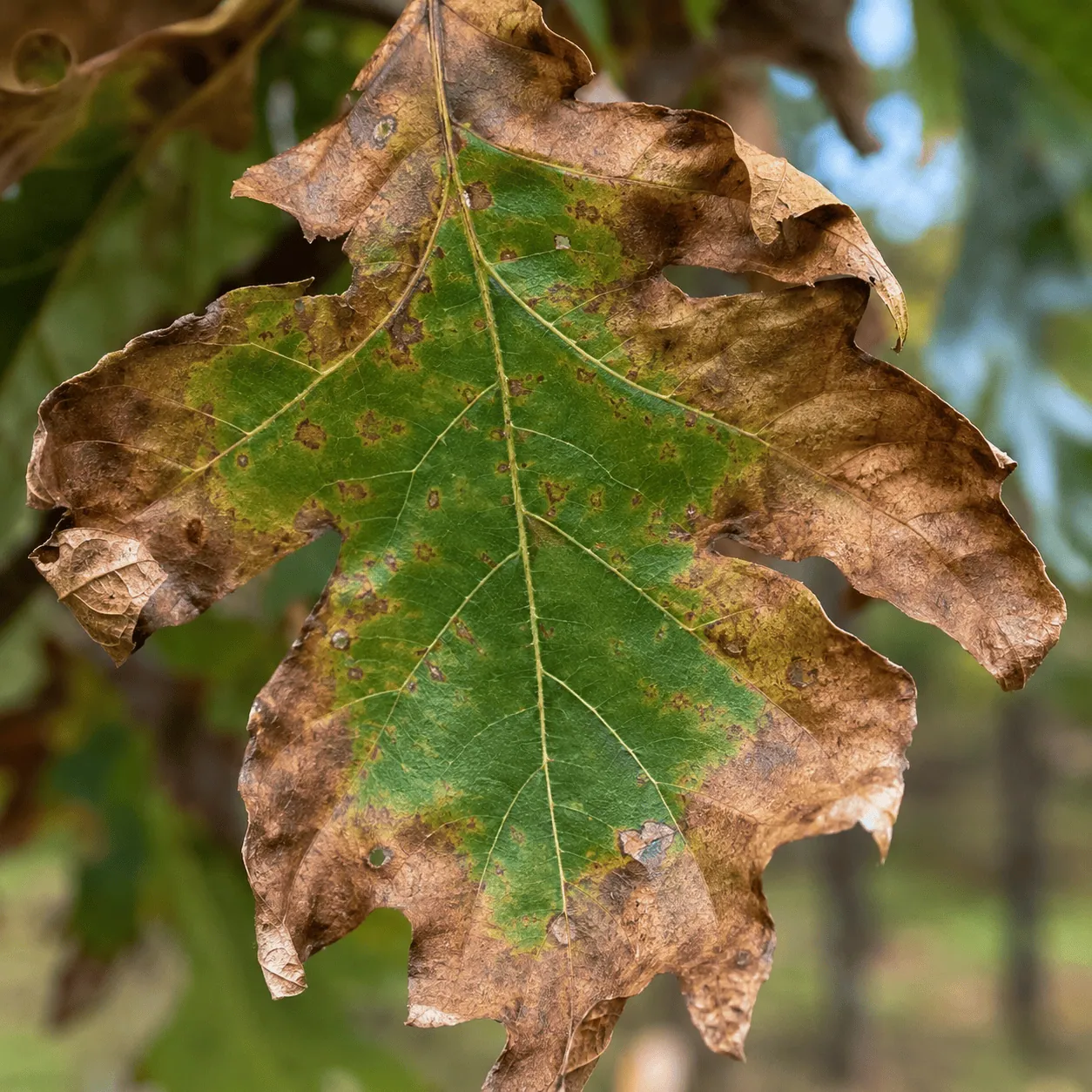
In red oaks, the symptoms appear rapidly and dramatically. The most distinctive sign is rapid leaf discoloration starting at the tips and outer edges of the leaves and progressing inward. The leaves turn bronze or brown while the base of the leaf near the midrib may remain green, creating a distinctive two-toned appearance. Affected leaves will begin to drop from the tree in large numbers, often while still partially green. This rapid defoliation during the summer months (typically July and August) is the most reliable visual indicator of oak wilt in red oaks. The tree may lose most of its canopy within two to four weeks of the first symptoms appearing.
White Oaks
White oaks show a slower progression. Leaves may wilt and discolor on individual branches, a symptom called “flagging,” rather than across the entire canopy at once. The disease may spread branch by branch over the course of a growing season or longer. While this slower progression provides more time to respond, it can also make the disease harder to identify definitively without laboratory testing.
The Critical Prevention Rule: Do Not Prune Oaks During High-Risk Months
The single most important thing you can do to protect your oak trees from wilt is to avoid pruning or wounding them during the high-risk season. In Minnesota, this period runs from approximately April 1 through July 31. During these months, sap-feeding beetles are active and the fungal spore mats on infected trees are producing spores. Any fresh wound on a healthy oak during this window is a potential infection site.
The safest time to prune oak trees in Minnesota is during the winter months, from November through March, when the ground is frozen, the beetles are inactive, and the fungus cannot spread. If pruning must be done outside of this window, it should be performed by a certified arborist who understands the risks and can take appropriate precautions.
What to Do If a Storm Damages Your Oak Tree
Storms do not follow the safe pruning calendar. If a storm breaks a branch on your oak tree during the high-risk season, you need to act immediately. The wound should be painted with a tree wound dressing or latex paint as quickly as possible, ideally within 15 minutes of the damage occurring. This creates a physical barrier that deters beetles from accessing the fresh wound. While wound dressings are not generally recommended for routine pruning, this is a specific, evidence-based exception for oak trees during the high-risk season.
Managing Oak Wilt Once It Is Detected
If you suspect a tree has oak wilt, the first step is to have it confirmed by an ISA Certified Arborist. The symptoms of oak wilt can resemble other conditions, and an accurate diagnosis is essential before taking action.
Once confirmed, the primary management strategy is to prevent the disease from spreading to neighboring trees through root grafts. This is accomplished by severing the root connections between the infected tree and its neighbors using a vibratory plow or trenching equipment. The trench must be deep enough to sever the grafted roots, typically 4 to 5 feet, and must be placed between the infected tree and the trees you are trying to protect.
The infected tree itself should be removed and the wood properly processed. Oak wilt wood must be debarked, chipped, or tightly covered with clear plastic to prevent the formation of spore mats and the attraction of beetles. Simply leaving infected wood in a pile is a significant risk to surrounding trees.
The Importance of Hiring an ISA Certified Arborist for Oak Wilt
Oak wilt management is not a DIY project. The decisions involved, including confirming the diagnosis, determining the extent of root grafting, planning the trenching operation, and safely removing and disposing of the infected tree, require professional expertise. An incorrect diagnosis can lead to the unnecessary removal of a healthy tree, while a missed diagnosis can allow the disease to spread unchecked to neighboring trees.
At Renstrom Tree Service, our ISA Certified Arborist has the training and experience to accurately assess oak health, identify the signs of oak wilt, and provide a clear management plan. We serve the northeast Twin Cities metro and understand the specific challenges that oak wilt presents in our local environment.
FAQs
1. Can a tree recover from oak wilt?
Red oaks rarely recover and typically die within weeks of showing symptoms. White oaks may survive longer and can sometimes be managed, but there is no cure once the tree is heavily infected. Early detection and root graft severance to protect neighboring trees is the primary management strategy.
2. When is the safe time to prune oak trees in Minnesota?
The safest time to prune oaks in Minnesota is during the winter months, from November through March, when sap-feeding beetles are inactive and the fungus cannot spread overland. Avoid all pruning from April through July.
3. How does oak wilt spread from tree to tree?
It spreads overland via sap-feeding beetles that carry fungal spores from infected trees to fresh wounds on healthy trees, and underground through interconnected root systems called root grafts.
4. Should I remove an oak tree that died from oak wilt?
Yes, but it must be handled carefully. The wood must be properly processed by debarking, chipping, or covering tightly with clear plastic to prevent the formation of spore mats that can attract beetles and spread the disease.
5. How do I know if my oak has wilt or just drought stress?
Both conditions can cause leaf discoloration and drop, but oak wilt typically progresses much faster and produces the distinctive bronzing pattern starting at the leaf tips. An arborist can examine the tree and, if necessary, send a sample to a laboratory for confirmation.
6. Can oak wilt spread to other tree species?
Oak wilt only affects trees in the oak family (Quercus). It does not spread to maples, elms, or other species.
Conclusion
Oak wilt is a serious and growing threat to the oak trees of the Twin Cities metro, but it is a threat that can be managed with the right knowledge and professional support. The most important actions you can take are to avoid pruning your oaks during the high-risk spring and summer months, to immediately address any storm damage to oak trees, and to call an arborist at the first sign of unusual leaf discoloration or drop.
If you are concerned about the health of your oak trees, or if you need to schedule safe winter pruning, contact Renstrom Tree Service. Our ISA Certified Arborists provide expert tree health assessments and oak wilt management across White Bear Lake, Lake Elmo, Stillwater, and the entire northeast Twin Cities metro.