Introduction
If you are a homeowner in White Bear Lake, Minnesota, you know trees are central to our neighborhoods. Mature oaks, maples, and evergreens provide summer shade and winter structure, and they help define property lines and curb appeal. But when a large limb splits during a storm, when a tree starts leaning toward your house, or when you see fungus at the base of a trunk, deciding who to hire to protect your property and the health of your trees can feel overwhelming.
Choosing the right company matters for safety, budget, and long-term landscape health. A qualified tree service will address immediate hazards, diagnose health problems correctly, and provide maintenance that prolongs the life of your trees. This article walks you through seven essential questions to ask before you hire a tree service in White Bear Lake so you can make an informed decision that protects your family, your home, and your trees.
Credentials and certification: Who will evaluate my trees?
Ask who will perform the tree assessment and what credentials they hold. The most meaningful credentials for tree diagnosis and risk evaluation are International Society of Arboriculture certification and the TRAQ credential for tree risk assessment. An ISA Certified Arborist has formal training in tree biology, pruning standards, and pest management, while a TRAQ-qualified professional follows a standardized process for identifying hazards and estimating risk. When you ask a company about credentials, listen for a clear answer naming the arborist who will visit your property and confirming their certifications. A reputable local company will be able to describe a written assessment process that includes inspection of the root flare, trunk, crown, and soil conditions rather than offering a quick drive-by estimate.
At Renstrom Tree LLC, for example, inspections are typically performed or overseen by ISA Certified Arborists and TRAQ-qualified staff, which helps ensure recommendations are consistent with industry standards and local best practices. If a company cannot identify who will be on-site or refuses to provide copies of their credentials upon request, treat that as a red flag. Proper credentials do not guarantee perfection, but they do indicate commitment to ongoing education and to following accepted arboricultural practices when pruning, removing, or treating trees.
Licensing, insurance, and safety practices
Before any work begins, verify that the company is fully licensed and carries both general liability and workers compensation insurance. Reliable companies will gladly provide a certificate of insurance showing current coverage. Insurance protects property owners from liability if a worker is injured while performing work on private property, and it ensures that damage to your home, vehicle, or landscaping caused during tree work is covered. Licensing requirements vary by state and municipality, but a company that is open about its credentials and permits is typically more trustworthy than one that is evasive.
Safety practices matter because tree work is inherently hazardous. Ask the company how they protect workers and the property during removals and large pruning jobs. Look for references to aerial lifts, rigging techniques, chipping practices for safe debris removal, and jobsite barricading to protect people and pets. A professional crew will explain fall protection, chainsaw safety, and how they plan to avoid damage to structures or underground utilities. If a contractor downplays safety or suggests cutting large branches in a way that risks property damage, pause and seek another proposal.
Local experience and knowledge of White Bear Lake conditions
Local knowledge matters when trees face region-specific stresses. White Bear Lake properties experience Minnesota winters, seasonal frost heaving, heavy summer rains, and localized pest pressures. An arborist familiar with the area will recognize issues that are more common here, such as winter salt injury near roads, root stress from compacted clay soils, or species-specific problems like oak wilt risk in certain parts of the region. A company with a decade or more serving the Minneapolis/St. Paul area has likely worked on the common varieties in White Bear Lake and knows which treatments or timing approaches are most effective in our climate.
Ask about past jobs in your neighborhood or similar properties and whether they can provide local references. Local companies also understand municipal permitting and neighborhood association requirements. Some tree removals or large pruning projects may need city notification or permits, and experienced local arborists will help you navigate those processes so the job complies with White Bear Lake rules and any applicable Washington County regulations.
Scope of services, equipment, and professional techniques
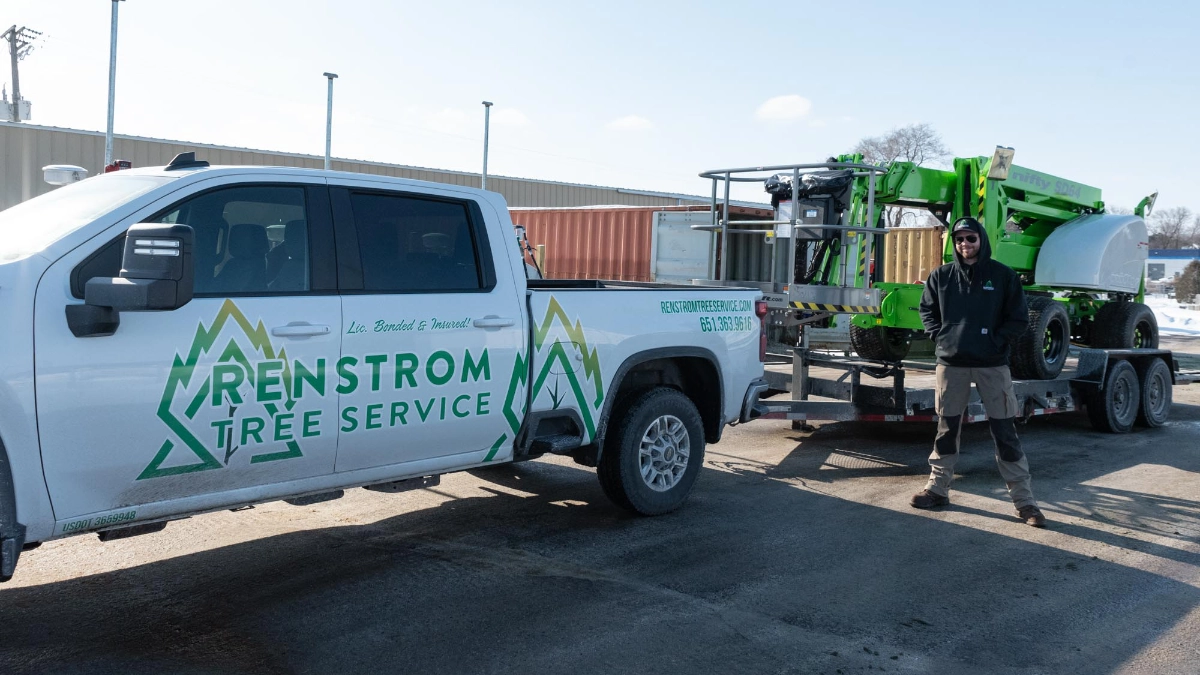
Make sure the company offers the specific services you need and has the right equipment for the job. Services can range from hazard pruning, crown restoration, and cabling and bracing to complete removals, stump grinding, and tree planting. The difference between a company that only performs small residential pruning and one that handles large removals with cranes and rigging is significant for price and safety. Ask how they plan to execute the work, including whether they will use aerial lifts, how they will rig large branches over structures, and what their cleanup protocol includes.
Inquire about their approach to diagnosing tree health. A competent arborist will explain diagnostic steps such as examining for root plate stability, testing for decay with a sonic tomograph or resistograph when appropriate, inspecting for signs of internal rot such as conks or fungal fruiting bodies, and evaluating crown structure for included bark or weak unions. TRAQ-qualified professionals can provide a risk assessment that quantifies likelihood and consequences of tree failure, which is helpful if you must decide whether to remove a tree or manage it with structural supports.
Estimates, contracts, pricing transparency, and cleanup
Get a detailed written estimate before any work begins that breaks out the scope, timeline, disposal procedures, and total cost. A transparent contract will specify who is responsible for permits, whether stump grinding is included, how wood and brush will be removed or left on-site, and the schedule for starting and completing the work. Be cautious if a quote is much lower than others without a clear explanation; unusually low bids sometimes mean corners will be cut on safety, insurance, or cleanup.
Confirm what the company will do with removed wood. Some homeowners want felled trunks cut into rounds and left for firewood, while others expect full removal and chipping. Stump grinding is a separate line item in many contracts, and it is worth discussing because above-ground stumps can be hazardous and interfere with future planting. Discuss payment terms and warranties for pruning or treatments. Industry-standard practice is to hold final payment until the job site is cleaned to your satisfaction and any promised follow-up treatments or inspections are scheduled.
Diagnosing tree problems: practical examples and warning signs
When evaluating potential contractors, it helps to know common diagnostic clues and how professionals interpret them. If you notice mushrooms or shelf fungi at the base of a trunk, that is often a sign of internal decay where wood-eating fungi have colonized heartwood. A progressive lean that develops over one or two seasons, especially when accompanied by soil heave or exposed roots after storms, may indicate root failure and an elevated risk of uprooting in high winds. Crown dieback that begins in the upper canopy and moves downward can signal vascular disease, insect infestation, or chronic stress from drought or soil compaction.
Woodpecker activity concentrated in one area of a trunk or limb can suggest the presence of wood-boring insects or internal decay, but it is not a definitive diagnosis on its own. A professional inspection will include a root collar examination to check for girdling roots, measurement of trunk taper and trunk fissures to evaluate structural integrity, and assessment of nearby structures and utility lines. For high-value trees or complex cases, ask whether the company uses advanced diagnostics such as increment borers, decay detectors, or consulting with pathologists. Early and accurate diagnosis can save homeowners money by enabling targeted treatments like localized pruning, soil aeration and amendments, cabling, or targeted pesticide or fungicide applications when appropriate.
Frequently Asked Questions
1. What should I expect during an on-site tree inspection?
A thorough on-site inspection will involve a walk-around assessment of the entire tree, including the root collar, trunk, main structural branches, and crown. The arborist should look for physical defects such as cracks, decay, and weak branch unions, and they should evaluate environmental factors like soil conditions, drainage, and proximity to structures or power lines. For higher-risk trees, a TRAQ assessment may be offered, which ranks failure potential and helps you weigh removal versus mitigation options. Expect a written estimate with recommended actions, an explanation of risks, and a timeline.
2. Is it safe to let a contractor prune from ladders instead of using aerial lifts?
Safety depends on the scope of work and the contractor’s techniques. For high or large trees, aerial lifts provide a stable platform and are generally safer than ladder work for prolonged pruning or removals. Reputable companies will use lifts, proper rigging, and fall protection for significant canopy work. Ladder pruning is acceptable for small jobs and low branches, but for complex cuts or when working over structures, ask for a lift or confirm that crews use appropriate fall arrest systems.
3. Do I need a permit to remove a tree in White Bear Lake?
Permit requirements vary depending on tree size, species, and location, as well as local ordinances or neighborhood covenants. Some jurisdictions have protections for significant or heritage trees, and removing them may require a city permit or approval. An experienced local tree service will know the typical permit landscape and can advise or help you obtain necessary permissions. If you suspect a tree is subject to protection, consult the city before scheduling removal.
4. How can I tell if a tree is worth saving or if it should be removed?
Decisions to save or remove a tree consider immediate hazard potential, long-term health prospects, and values such as landscape function and costs of treatment. Signs that favor removal include extensive root decay, severe trunk defects, a pronounced lean with root plate uplift, or mortality affecting more than half the crown. If the tree has structural defects that can be mitigated with cabling and selective pruning, and the species is otherwise healthy, an ISA Certified Arborist may recommend preservation. A written risk assessment helps homeowners make an informed choice.
5. What are reasonable cleanup expectations after tree work?
Professional crews should haul away wood, chip branches, grind stumps if contracted, and restore the work area to a tidy condition. Expect a description in the contract about whether chips are left on-site, distributed in garden beds, or hauled away. For removals near lawns or gardens, crews should minimize soil compaction and hand-rake sensitive areas. Discuss disposal of valuable timber if you want logs cut and stacked for firewood, and confirm whether there are additional charges for removal of large trunks.
6. How do seasonal conditions affect timing for pruning or removals?
Seasonal timing depends on the objective. Dormant-season pruning in late winter is often recommended for many species because it reduces stress and risk of disease spread. Emergency removals must happen anytime a hazard is imminent, regardless of season. Some pest treatments must be applied at specific times of year for effectiveness. In spring and summer, heavy foliage can complicate visibility for pruning cuts, and frozen or saturated soils can affect equipment access and increase soil compaction, so discuss timing with your arborist to balance biological benefits and practical considerations.
Conclusion
Choosing a tree service in White Bear Lake is a decision that combines safety, local knowledge, and horticultural expertise. By asking the seven important questions covered here – who will evaluate your trees, whether the company is licensed and insured, how they address safety, their local experience, the scope of services and equipment, pricing transparency, and how they diagnose problems – you can select a contractor that protects your property and trees. Prioritize companies that provide written estimates, identify the certified arborist who will conduct assessments, and explain their methods clearly. Those qualities protect you financially and reduce the risk of damage or injury during tree care.
Ready to Get Started?
If you are ready to schedule an inspection or want a no-obligation estimate for work in the White Bear Lake area, visit our White Bear Lake tree service page to request a site visit. To learn more about our family-owned company, our ISA Certified Arborists, TRAQ-qualified staff, and our local roots led by Erik Renstrom, see our About Us page. We are fully licensed and insured, and honored to be a 2024 Nextdoor Neighborhood Fave and a 2024 Readers’ Choice Winner for Best of the Press in White Bear Lake and Vadnais Heights.