
Introduction
Minnesota homeowners know that trees are central to the character and value of a yard. From stately oaks shading a porch in St. Paul to maples lining streets in White Bear Lake, trees add beauty, privacy, and cooling relief in summer. But in our climate with heavy snow, strong winds, and freeze-thaw cycles, tree placement matters more than it might in milder regions. Poorly placed trees can cause foundation issues, damage driveways, create hazards during storms, and interfere with utility lines.
If you are searching for tree trimming near me, you likely want not just pruning services but clear guidance on planning and maintenance that protect your home, driveway, and neighborhood utilities. As a family-owned company led by Erik Renstrom with ISA Certified Arborists and TRAQ-qualified staff, Renstrom Tree LLC has evaluated thousands of Minnesota properties over a decade. This guide explains practical distance recommendations, diagnostic examples, safety warnings, and planting and trimming strategies tailored to the Twin Cities area.
Why distance matters in Minnesota yards
Distance is not just an aesthetic consideration; it is an engineering and safety decision. Trees influence buildings and surfaces in three major ways: canopy and branch contact, root growth and soil moisture changes, and the risk of failure under ice, snow, or wind. In Minnesota, freeze-thaw cycles and heavy snow loads can cause branches to become brittle or accumulate weight and fall. Saturated soils in spring increase the likelihood of root movement and heaving that can lift pavement. Close proximity allows a single failed limb or uprooted tree to impact roofs, gutters, driveways, or power lines, increasing repair costs and safety risks.
Professional arborists consider mature tree size, species root habits, soil type, and local microclimates when estimating safe distances. For example, a mature silver maple with shallow roots and brittle wood requires a different placement strategy than a Norway spruce with a deep root plate. Our ISA Certified Arborists and TRAQ-qualified technicians at Renstrom Tree LLC perform property evaluations to identify existing risks and recommend planting or trimming plans that reduce storm damage, protect foundations, and maintain utility clearances.
Recommended distances from houses
A common planning rule is to keep trees far enough from a house that the expected mature canopy will not overhang the roof or hang within striking distance in a storm. For many medium to large trees, that means planting at least as many feet away from the house as the tree’s mature height. So if a species is expected to reach 40 to 60 feet tall, aim for 40 to 60 feet of horizontal distance from the foundation, not just from the roofline. This general guideline helps prevent direct branch impact on roofs and reduces the chance of roots compromising foundations or underground utilities.
Beyond canopy distance, roots and soil moisture are critical. Trees with aggressive or surface-rooting habits, such as certain poplars, willows, and silver maples, should be planted further away from foundations because they can exploit cracks in mortar and disturb shallow footings. For these species, a minimum planting distance of 25 to 40 feet from the house is prudent in many Minnesota soils. Small ornamental trees with a mature height under 25 feet can be positioned closer, often 10 to 15 feet away from the structure, provided the species is appropriate for near-foundation planting.
Maintaining a minimum clearance between branches and the roof is also important for maintenance and pest prevention. Branches that touch or hang over shingles create a path for squirrels, raccoons, and insects to enter attics, and they accelerate shingle wear. A working target is to keep branches at least 6 to 10 feet from the roofline where possible. When trimming is needed, search for tree trimming near me professionals who follow ANSI pruning standards to avoid improper cuts that weaken trees.
Trees and driveways: preventing root damage
Driveways and sidewalks are often victims of root heave. Roots seek oxygen and space and will grow under paved surfaces, lifting asphalt or concrete as they expand. The result is cracked curbs, uneven surfaces, tripping hazards, and expensive repairs. Minnesota’s freeze-thaw cycle exacerbates these issues because heaved slabs can be further shifted by frost action.
The appropriate setback from a driveway depends on the species and the driveway material. For large shade trees, design a planting distance of at least 20 to 30 feet from the edge of asphalt or concrete to allow roots to develop without lifting the surface. For medium trees, 15 to 20 feet may be sufficient. If planting closer is necessary for space-limited city lots, choosing a species with a non-invasive root system or installing root barriers can reduce the risk. Root barriers are not a universal solution, and they require proper installation and ongoing monitoring; our TRAQ-qualified staff can evaluate when barriers are a good investment.
Diagnosing root-related driveway issues begins with observing patterns: cracking that radiates outward from a tree, pavement lifted on one side, or shallow roots visible beneath the edge. In one local diagnostic case, a 50-year-old maple planted within 8 feet of a Roseville driveway caused repeated asphalt uplift. After an arborist assessment, the homeowner opted for phased removal and replacement of the driveway with a design that accommodated the existing mature canopy in a safer configuration.
Trees and power lines: safety and utility rules
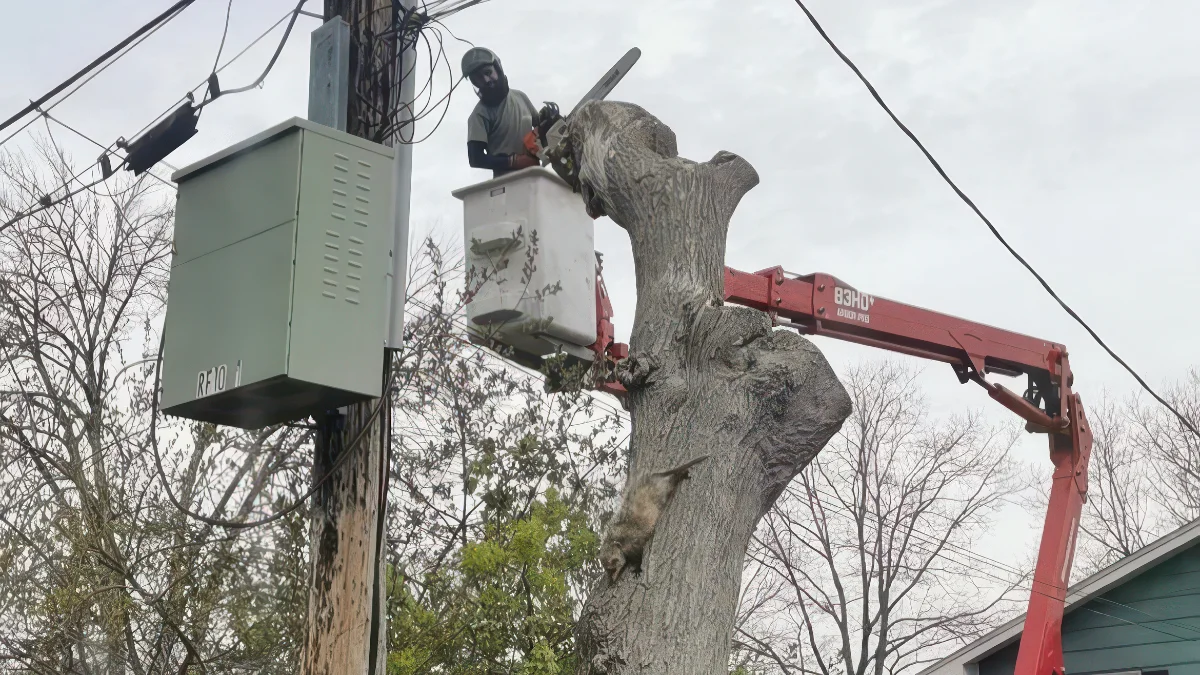
Overhead utilities introduce another set of constraints. Trees contacting live wires are a major cause of outages and can create electrocution hazards. Utility companies and arboriculture best practices emphasize preventing tree limbs from growing into power lines. For planning purposes, most utility guidance and arborists recommend planting small trees directly under utility lines only when their mature height is expected to be less than the line height. Medium and large species should be planted significantly offset or avoided in proximity to primary service lines.
Utility maintenance needs and clearance requirements vary by utility and voltage, and local municipal codes may apply. Before planting, homeowners should call their local utility or use the state “call before you dig” resource to identify underground utilities and to inquire about recommended horizontal clearances for overhead conductors. For trees near private service lines, keeping a 10 to 15 foot clearance from conductors is a common target for lateral space between branches and lines, but this cannot replace the utility’s requirements. For reliability and storm readiness, periodic professional pruning by arborists trained in utility-tree interactions keeps clearance adequate and reduces the chance of dangerous contact during ice storms.
In Minnesota, ice storms and heavy wet snow are frequent contributors to limb failure. Trees with weak branch attachments, such as certain maples and poplars, should be kept well away from service drops and transformers. If you are searching for tree trimming near me and your property has trees close to power infrastructure, choose a provider with experience in power-line safety and familiarity with local utility practices. Renstrom Tree LLC routinely coordinates with utilities and follows recognized storm-safety approaches described in our power-line storm-safety post.
Planting and species selection for safe distances
Appropriate species selection is the single most effective preventive measure. Planting a tree that will grow into a mature, large canopy directly next to a house or driveway creates long-term problems, whereas a small ornamental or columnar variety may be perfectly safe in the same spot. In Minnesota, common landscape species include sugar maple, red maple, bur oak, white oak, American elm cultivars, black cherry, spruce, pine, and several ornamental cherries and crabapples. Each has different mature height, root tendencies, and wood strength characteristics that affect recommended planting distances.
When choosing species, consider mature height and root behavior first, then salt tolerance, winter wind firmness, and susceptibility to pests like emerald ash borer. Avoid planting shallow-rooted, fast-growing trees such as silver maple and certain poplars near foundations and driveways. For narrow planting strips or under power lines, select species with mound-like or columnar growth habits. If a tree will be within 25 feet of a structure or driveway, prioritize species with non-invasive roots and high wood strength. When in doubt, consult a certified arborist who can recommend species based on soil tests, exposure, and neighborhood microclimate. As a family-owned company serving White Bear Lake, Lake Elmo, Stillwater and the greater Twin Cities area, we provide site-specific planting plans along with maintenance schedules that extend the life of landscape investments.
Safety warnings and when to call a professional
Some risks require immediate arborist attention. Trees that lean suddenly after storms, roots heaving near foundations, or cracks appearing where roots contact structures should be inspected promptly. Likewise, trees with major limbs hanging over roofs or power lines present an urgent risk when ice and wind events are in the forecast. Homeowners should avoid attempting heavy branch removal or removal of large trees themselves; improper cuts and lack of safety equipment are common causes of injury and property damage.
If you see sudden canopy loss, exposed root balls, or cracks in tree trunks, contact an ISA Certified Arborist for an assessment. Our company is fully licensed and insured, and our staff includes ISA Certified and TRAQ-qualified arborists who follow industry safety standards and local permit requirements. For trees impacting power lines, contact the utility first and then coordinate with a professional arborist; utilities often have jurisdiction over vegetation clearance within the public right-of-way.
Frequently Asked Questions
1. How close can I plant a tree to my house without risking foundation damage?
Planting distance depends on species and mature size. A conservative approach is to plant small ornamentals 10 to 15 feet from foundations and medium to large shade trees as far away as their mature height. For trees with aggressive or surface roots, increase distance to 25 to 40 feet. Soil type and existing drainage can change those numbers, so an on-site assessment by an arborist is ideal.
2. Will tree roots damage my driveway if the trunk is 12 feet away?
If the tree species has aggressive, shallow roots, yes, roots may eventually lift asphalt or concrete from that distance. For trees with less-invasive root systems, 12 feet may be acceptable for smaller species. Diagnose early signs of root lift and consult a professional to evaluate options such as root barriers, species replacement, or phased pavement replacement.
3. What clearance should I keep between tree branches and my roof?
Aim to keep branches at least 6 to 10 feet from the roofline to avoid physical impact, pest access, and accelerated shingle wear. Taller canopies that overhang roofs should be managed with regular pruning by a certified arborist to maintain safe clearances and tree health.
4. How close is too close to power lines when planting a tree?
Avoid planting medium to large trees directly beneath overhead service lines. Small trees with mature heights under line height may be acceptable, but utilities often require specific clearances. Before planting, check with your utility about clearance requirements and consider planting small or columnar species to minimize conflict.
5. Can pruning fix a tree that is planted too close to a driveway or house?
Pruning can reduce canopy weight and adjust branch growth, but it cannot fully mitigate root-related issues or the long-term problem of a tree being physically too close to a structure. In some cases, careful pruning combined with root management can extend the life of the installation, but removal and replanting with a more appropriate species or location is sometimes the best long-term solution.
6. How do I find reliable local help when searching for tree trimming near me?
Look for a tree company with ISA Certified Arborists, TRAQ-qualified staff, proper licensing and insurance, and local references. Check recent awards and community recognition for quality work. Renstrom Tree LLC is a family-owned company led by Erik Renstrom, with ISA Certified Arborists on staff, 2024 Nextdoor Neighborhood Fave recognition in White Bear Lake, and the 2024 Readers’ Choice award for Best of the Press in White Bear Lake and Vadnais Heights. A site visit and written plan are signs of a professional approach.
Conclusion
Proper spacing between trees and your house, driveway, and power lines reduces risk, lowers long-term maintenance costs, and preserves the health and beauty of your landscape. In Minnesota, where weather extremes and soil conditions influence tree behavior, planning for the mature size and root pattern of a species is essential. Regular inspections by ISA Certified Arborists and targeted pruning or removal when necessary will keep your property safer and more resilient to storms.
Ready to Plan Safer Tree Placement?
If you are considering a planting plan, worried about roots under a driveway, or need expert pruning, start with our practical resources and personalized consultations. Visit our Tree trimming versus pruning post to learn how the right service protects your property, and read our power-line storm-safety post for safety-focused guidance. Contact Renstrom Tree LLC to schedule a property assessment or to discuss options for your Minnesota yard.