
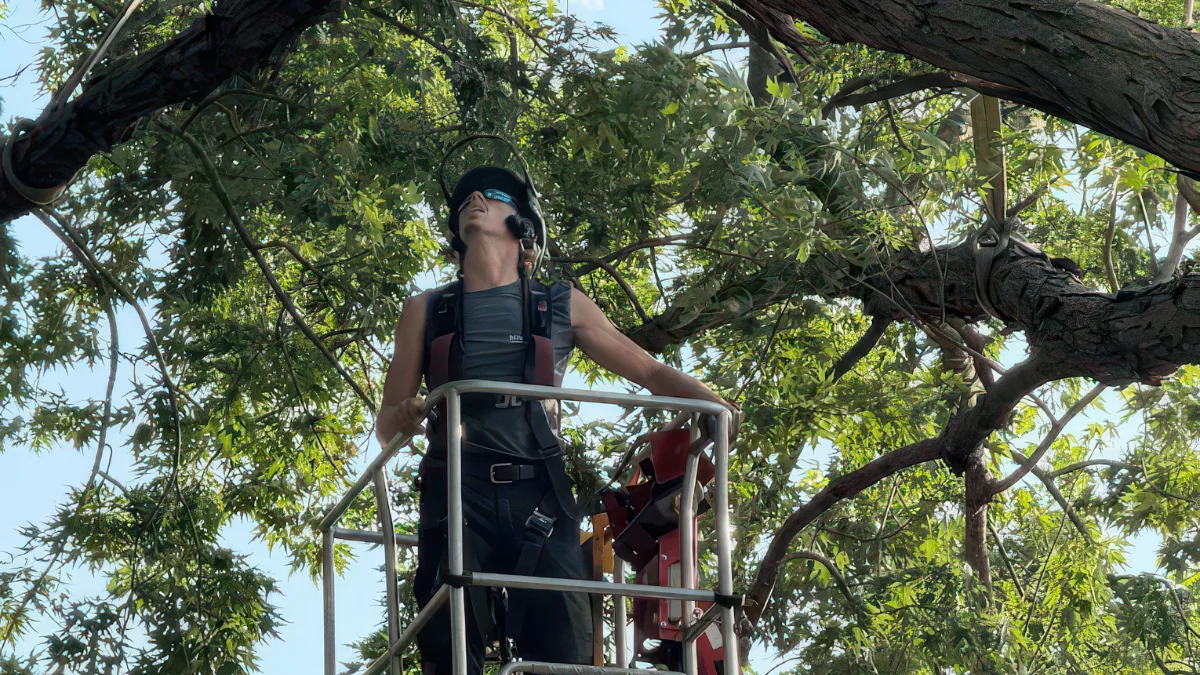
June storms hit hard across the Northeast Twin Cities Metro, and plenty of property owners are now looking at hail damage trees White Bear Lake neighborhoods may be dealing with. Around White Bear Lake, Lake Elmo, Stillwater, Roseville, Mahtomedi, and Washington County, hail can roll in fast on a humid afternoon, shred a canopy in minutes, and leave behind damage that is not easy to see from the ground.
That is where the problem starts. A maple along a driveway may still look full and green from the street, while the upper crown has bruised bark, torn leaf tissue, broken buds, cracked twigs, or small wounds that can invite pests, disease, and decay later in the season.
If you own a home, manage a commercial site, or care for a wooded property in White Bear Lake, Lake Elmo, Stillwater, Roseville, Mahtomedi, Washington County, or Ramsey County, the next step is not just picking up sticks. A tree that looks fine after a June hail storm can still have weakened limbs, split unions, hanging branches, or root stress that becomes dangerous during the next round of high winds and heavy rain.
How Hail Damage Trees White Bear Lake Homeowners Even When They Look Fine
Hail damages trees by hitting leaves, bark, twigs, buds, fruiting structures, and small branches with sudden force. Even pea-sized hail can bruise tender growth, and larger stones can tear through foliage, dent thin bark, and knock protective tissue loose before a homeowner has time to get across the yard.
Leaves usually tell the first part of the story. After a strong storm near White Bear Lake or Mahtomedi, you may see holes punched through leaves, ragged edges, shredded sections of canopy, or piles of green leaf pieces scattered across patios, sidewalks, and driveways.
That leaf damage matters because leaves are the tree’s food-making system. When hail strips or tears a large part of the canopy in June, the tree loses energy during one of the most important growth periods of a Minnesota summer.
Bark damage can be more serious than leaf damage, especially on young or thin-barked trees. Maples, lindens, birches, crabapples, serviceberries, and ornamental trees common in White Bear Lake neighborhoods can show small bruises, dents, or scars where hailstones struck the trunk and branches.
Mature trees can hide these wounds better. A large oak near a Washington County driveway or a boulevard maple in Roseville may carry small impact marks high in the crown where no one can see them without a closer inspection.
Branches and twigs take a beating too. Small-diameter limbs may crack, split, lose buds, or break at weak attachments, especially in yards near open water, farm fields, parking lots, and exposed commercial corridors where wind can drive hail sideways.
Those injuries do not always fail right away. A cracked limb may stay in place through the first calm week after the storm, then drop during the next windy evening when another line of weather moves across Ramsey County.
From the ground, a lot of hail injury blends into the canopy. You see green leaves and assume the tree is recovering, while the top of the tree may have broken tips, torn bark, damaged buds, and hangers caught between branches.
That is why post-storm inspection should look at the whole tree, not just the trunk and the branches you can reach from the lawn. The upper crown, branch unions, root flare, and site conditions all help tell whether the tree is recovering normally or carrying hidden risk.
The Hidden Risks: Disease, Pests, and Structural Failure After Hail
The biggest problem after hail is not always the damage you notice the same day. Small wounds can become long-term openings for decay organisms, insects, and structural weakness, especially when the tree is already under stress.
Trees do not heal like people heal. They seal injuries by growing new wood around damaged areas and by chemically walling off decay, a process arborists often describe as compartmentalization.
Here is why that matters. If a tree has been stressed by drought, compacted soil, construction traffic, poor pruning, root damage, or repeated storm injury, it may not seal hail wounds as effectively as a vigorous tree with good growing conditions.
Open wounds can attract pests and disease organisms. Boring insects, canker diseases, fungal decay, and opportunistic pests often move into trees that have fresh bark damage or broken branch stubs after severe weather.
Once decay starts, it can spread into wood that supports the canopy. The outside of a branch can look solid while the interior slowly softens around an old wound, split, or cracked attachment point.
That hidden decay is one reason storm-damaged trees need careful attention. A limb may carry leaves all summer, then fail under a heavy rain, a sudden August wind, or the first wet snow later in the year.
The risk climbs when the tree already had defects before the hail storm. Co-dominant stems, included bark, old storm cracks, dead limbs, cavities, poor branch attachments, and previous topping cuts can all become more dangerous when hail adds new wounds.
Hail may not be the only reason a tree fails. It can be the extra stress that pushes a weak limb, cracked union, or decayed branch past the point where it can safely hold.
Commercial properties should take this seriously. Parking lots, sidewalks, outdoor seating areas, signs, entrances, and delivery zones often sit under mature trees, especially along busy corridors in Roseville, White Bear Lake, and Stillwater.
Residential properties have the same concern in different places. Driveways, roofs, fences, decks, play sets, garages, lake cabins, and neighbor boundaries can all become targets when a storm-weakened limb finally lets go.
Hidden storm damage is not just a tree health issue. It is a property protection issue, and it deserves more than a quick glance from the lawn after the branches have been dragged to the curb.
How High Winds Compound Hail Damage in the Twin Cities
High winds make hail damage worse because they load injured branches, twist crowns, and pull against the root system all at once. When hail wounds the canopy first, wind can pry those weak points open before the tree has any chance to respond.
Wind moves through the whole tree. It pushes the leaves and branches, transfers force down the trunk, and then shifts that force into the root plate and surrounding soil.
In a wet June, that soil condition matters. Saturated clay soils, low spots near wetlands, compacted boulevard strips, and poorly drained areas in Washington County can reduce root holding strength after repeated rain.
A tree may not tip over completely to have root damage. If the root plate shifts even a little, you may see fresh cracks in the soil, lifting on one side of the root flare, or a lean that was not there before the storm.
Branches already bruised or cracked by hail can also fail later under wind pressure. A small split can become a longer split, and a limb that stayed attached during the storm can turn into a hanger that drops days or weeks afterward.
That pattern is common in the Twin Cities because severe weather rarely delivers one clean type of damage. A humid afternoon can turn into hail, straight-line wind, heavy rain, lightning, and rapid temperature changes before dinner.
White Bear Lake, Lake Elmo, Stillwater, Roseville, Mahtomedi, and surrounding communities can all see those conditions in the same system. Open areas near Lake Elmo fields, exposed lots along Highway 36, lake-facing yards, and bluffs near Stillwater may take especially hard wind exposure.
Wind also reveals defects that were already present. A tree with a tight branch union or included bark may stand for years, then a storm hits from the wrong direction and puts force exactly where the tree is weakest.
After hail has bruised bark and shredded parts of the canopy, that weak union has less margin for error. The tree may still look alive and green, but structure is what determines whether it can safely hold up over people, vehicles, and buildings.
Roots deserve just as much attention as branches. If a tree is leaning more than before, the soil has lifted, or cracks have opened around the root flare, the damage may be below ground even if the canopy still looks fairly normal.
Why a Post-Storm Tree Assessment by an ISA Certified Arborist Matters
A post-storm tree assessment matters because trained arborists know where storm defects hide. After hail and wind, the most important problems are often above eye level, tucked inside branch unions, or buried in the upper canopy where a property owner cannot safely inspect them.
Erik Renstrom is an ISA Certified Arborist and TRAQ-qualified tree risk assessor, which means he has advanced training in tree biology, structural defects, and tree risk evaluation. For property owners in White Bear Lake and the Northeast Twin Cities Metro, that kind of review helps separate cosmetic hail damage from damage that could affect safety.
A professional post-storm tree assessment looks at far more than broken branches on the lawn. It includes canopy condition, bark wounds, deadwood, cracks, branch attachments, trunk defects, root plate movement, soil conditions, and nearby targets such as homes, garages, vehicles, walkways, patios, and utility areas.
That broader view matters because not every damaged tree needs the same response. Some trees can recover from limited leaf loss and small twig damage, while others need corrective pruning, close monitoring, cabling, or removal because the structure has been compromised.
Species matters too. A young linden in a White Bear Lake front yard, a mature cottonwood near water, an oak on a Stillwater hillside, and an ornamental crabapple in Roseville will not respond to hail injury in exactly the same way.
Age, health, wound size, canopy loss, existing defects, and location all affect the recommendation. Guessing from the driveway can lead to two bad outcomes: removing a tree that could have been saved or keeping a tree that has become unsafe.
The University of Minnesota Extension notes that if more than 50 percent of a tree’s crown is damaged, the tree may have a reduced chance of long-term survival and may need careful evaluation. Their storm guidance for landscape trees also explains that major broken limbs, split trunks, and damaged crowns should be assessed before cleanup decisions are made. You can review their guidance here: University of Minnesota Extension storm damage to landscape trees.
An arborist assessment is especially valuable for high-value trees near homes, lake properties, schools, churches, retail sites, and commercial buildings. Mature shade trees provide cooling, privacy, curb appeal, habitat, and property value, but large limbs also carry more risk when storm damage weakens them.
Renstrom Tree Service approaches these evaluations with The Renstrom Standard: No Shortcuts, No Guesswork, No Exceptions. That standard matters after severe weather because rushed cleanup can miss hanging limbs, hidden cracks, torn bark, and root instability that may not be obvious until the next storm.
A careful inspection helps protect people, buildings, and the long-term health of the tree. It also gives property owners a clear plan instead of a vague wait and see when the stakes include roofs, driveways, sidewalks, and occupied spaces.
Precision Pruning: Removing Damaged Limbs Before They Become a Hazard
Precision pruning removes storm-damaged limbs in a way that protects both safety and tree health. The goal is not to strip the canopy, top the tree, or make random cuts, but to remove broken, cracked, diseased, or poorly attached limbs at the proper location.
Poor pruning can make storm damage worse. Flush cuts, long stubs, topping, lion-tailing, and over-thinning create larger wounds, invite decay, and leave the tree with weaker branch structure in future storms.
After hail, the tree already has wounds. Every cut should have a reason, and every cut should be made where the tree has the best chance to seal the injury.
Professional precision pruning focuses on clean cuts that respect the branch collar. The branch collar contains specialized tissue that helps the tree seal off the wound, so cutting into it can slow recovery and increase decay risk.
Preserving live canopy is just as important. If hail has already shredded or stripped leaves, removing too much healthy foliage can reduce the tree’s energy supply at the exact time it needs energy to respond to injury.
For White Bear Lake property owners, tree trimming after hail should be targeted. Damaged limbs over roofs, driveways, sidewalks, patios, parking lots, play areas, and neighbor fences should be evaluated before anyone starts cutting branches just because they look rough.
Some limbs need prompt removal. Cracks, hanging sections, split unions, torn bark, and limbs resting on other branches can all signal a higher chance of failure.
Precision pruning also helps restore structure. When wind and hail damage one side of a canopy, the remaining branches may carry uneven weight, and selective pruning can reduce load without leaving the tree lopsided or stripped.
This work is different from routine trimming. Storm damage tree service requires judgment about what to remove now, what to monitor through the season, and what should be left alone so the tree can rebuild energy.
Cutting too much can increase stress. Cutting too little can leave hazards over active areas where people park, walk, work, and play.
Emergency tree service may be needed when limbs are hanging over occupied areas, a tree is leaning toward a structure, or major branches have partially failed. Renstrom Tree Service maintains 24/7 emergency response capability for storm-related tree hazards in the Northeast Twin Cities Metro, which matters when damage cannot safely wait for normal scheduling.
Crane-assisted tree removal may also be appropriate in certain hazardous situations. If a large tree or limb is over a home, garage, commercial building, fence line, or tight access area, crane work can allow controlled removal with less impact to the surrounding site.
The right method depends on the tree, the target, the access, and the level of risk. A careful plan protects the property and avoids turning storm cleanup into a second round of damage.
Frequently Asked Questions
How can I tell if hail damaged my tree?
Hail damage often shows up as shredded leaves, broken twigs, bruised bark, and small wounds on branches. You may also notice green leaf pieces across the lawn, torn buds, or small dents on tender bark after a storm moves through White Bear Lake. From the ground, the upper canopy may hide the worst damage, especially on mature trees near homes, lakes, and wooded lots. Renstrom Tree Service looks for both visible and hidden storm defects during a post-storm review. In the Twin Cities, hail and wind often arrive together. That means branch cracks, split unions, hangers, and root stress should also be checked before assuming the tree is fine.
Will my tree recover after June hail?
Many trees can recover from light or moderate hail damage if the structure is sound and the tree was healthy before the storm. A tree with good vigor, adequate soil moisture, and limited canopy loss has a much better chance than a tree already stressed by drought, compaction, disease, or previous storm damage. Recovery depends on the tree species, how much canopy was lost, and whether bark or branch wounds are severe. Renstrom Tree Service can help White Bear Lake property owners understand whether trimming, monitoring, cabling, or removal is the right next step. In the Twin Cities, recovery also depends on what happens after the first storm. More hail, high winds, humid disease pressure, drought stress, and insect activity can all affect how well a damaged tree responds through the rest of summer.
Should I trim hail-damaged branches myself?
Small, low branches may look simple, but storm-damaged limbs can shift, split, or fall without warning. Even a branch that seems manageable can be under tension if it is caught in the canopy or resting against another limb. Larger limbs, hanging branches, and anything near a roof, driveway, sidewalk, patio, or walkway should be handled with proper equipment and training. Renstrom Tree Service provides tree trimming White Bear Lake property owners can use to reduce risk after hail and wind. Across the Twin Cities, safe pruning means making the right cut without causing more damage to the tree. It also means knowing when a limb is too unstable to handle without professional equipment.
When is hail damage an emergency?
Hail damage becomes an emergency when broken limbs are hanging over people, buildings, vehicles, sidewalks, driveways, patios, or utility areas. A leaning tree, cracked trunk, lifted root plate, or large split branch should be treated as a serious warning sign. Some hazards are obvious, like a limb resting on a roof or hanging over a parking area. Others are quieter, such as fresh soil cracking at the root flare or a large branch split that is hidden by leaves. Renstrom Tree Service provides emergency tree service for White Bear Lake and the Twin Cities when storm damage creates immediate hazards. If the tree could fall or drop limbs into an active area, it should be evaluated promptly.
Why hire an ISA Certified Arborist after a storm?
An ISA Certified Arborist Minnesota property owners trust can identify defects that are easy to miss from the ground. After hail and high winds, the biggest risks may be hidden in branch unions, upper canopy damage, trunk cracks, or root movement. Arborists also understand how trees respond biologically after injury. That matters because the best recommendation is not always cut more, and it is not always leave it alone. Renstrom Tree Service brings arborist training to White Bear Lake storm inspections and Twin Cities tree risk concerns. That expertise helps property owners make informed decisions instead of relying on guesswork after severe weather.
Protect Your Property Before the Next Storm
The best time to address hail damage is before the next storm turns weakened limbs into falling hazards. If June’s hail and high winds hit your trees in White Bear Lake, Lake Elmo, Stillwater, Roseville, Mahtomedi, Washington County, or Ramsey County, do not rely only on what you can see from the ground.
Minnesota summer weather can change fast. A quiet, humid afternoon can turn into another round of hail, heavy rain, and straight-line wind before damaged limbs have had any chance to recover.
Renstrom Tree Service follows The Renstrom Standard: No Shortcuts, No Guesswork, No Exceptions. To protect your home, business, and trees, request a free estimate for a post-storm tree assessment today.