
Walking across a yard in White Bear Lake, Lake Elmo, or the Twin Cities, it is common to encounter thick, woody tree roots breaking through the surface of the lawn. While exposed tree roots are a natural feature of many mature landscapes, they can be a source of frustration for homeowners trying to mow the grass or maintain a smooth yard. More importantly, exposed roots can sometimes indicate underlying issues with the tree’s environment or structural stability. Understanding why roots surface and how to handle them is essential for preserving the health of your trees and the safety of your property.
Why Do Tree Roots Come to the Surface?
Contrary to popular belief, the vast majority of a tree’s root system does not grow deep into the earth. Most tree roots remain within the top eighteen to twenty-four inches of soil, where oxygen, water, and nutrients are most abundant. As a tree grows and matures, these shallow roots naturally expand in diameter, eventually pushing through the surface of the soil.
Certain species, such as maples and willows, are genetically predisposed to developing prominent surface roots. In these cases, exposed roots are simply a sign of a large, mature tree growing normally. However, environmental factors can also force roots upward.
Environmental Causes of Exposed Roots
Soil erosion is a primary cause of newly exposed roots. Heavy rains, poor drainage, or a lack of ground cover can wash away the topsoil, leaving the root system bare. In communities with mature landscapes like Roseville and St. Paul, years of natural erosion often reveal roots that were once safely buried.
Compacted soil is another major factor. If the soil around a tree is heavily compacted by foot traffic or construction, oxygen and water cannot penetrate deeply. The tree roots are forced to grow directly at the surface in a desperate attempt to access the air and moisture they need to survive.
When Exposed Roots Signal a Problem
While surface roots are often harmless, certain conditions require an arborist’s attention. If you notice roots that are severely damaged, splintered, or showing signs of fungal growth, the tree’s health may be compromised. Damaged roots cannot effectively transport water and nutrients to the canopy.
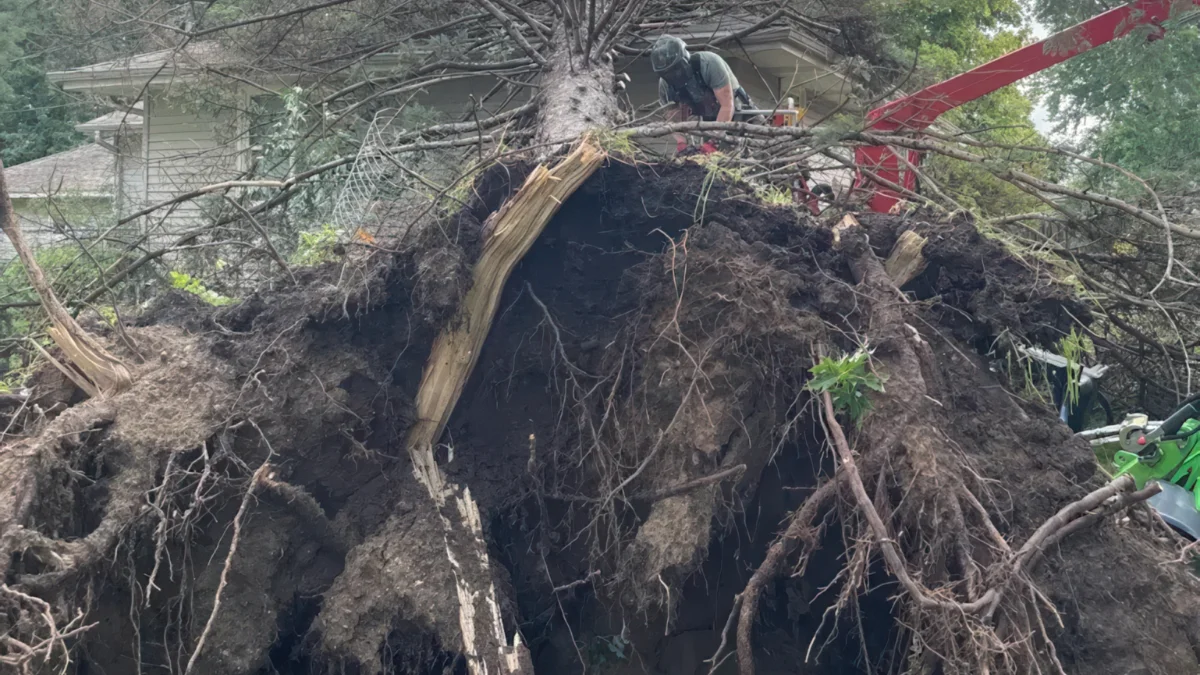
Furthermore, if you see the soil heaving or lifting around the base of the tree, especially after a storm, this is a critical warning sign. It indicates that the tree’s structural anchor is failing, and the tree may be at imminent risk of uprooting. In this scenario, an immediate tree risk assessment is required.
How to Safely Manage Surface Roots
The most important rule of managing exposed tree roots is to never cut them. Severing large surface roots can destabilize the tree and create entry points for fatal diseases.
Instead of cutting, the best approach is to protect the roots by applying a two-to-three-inch layer of organic mulch over the area. Mulch insulates the roots, retains moisture, and eliminates the need to mow closely around them, preventing mower damage. Do not pile extra topsoil over the roots, as burying them too deeply can suffocate the tree.
Protect Surface Roots From Mowers and Foot Traffic
Surface roots are vulnerable to injury from lawn mowers, string trimmers, vehicles, and repeated foot traffic. Even a small wound to the bark of a root can become an entry point for pests or decay. When roots cross a frequently used part of the yard, a mulch bed can create a clear boundary that protects both the tree and people walking nearby.
Avoid stacking heavy materials, parking vehicles, or placing a permanent structure over the root zone. Compaction reduces the air spaces in the soil that roots need to breathe. It can also force new roots even closer to the surface, making the problem more noticeable over time.
Create a Healthy Mulch Ring
A mulch ring is one of the safest and most useful responses to exposed roots. Spread natural wood chips in a wide circle, two to three inches deep, and keep the mulch several inches away from the trunk. This helps hold moisture, moderate soil temperature, and reduce competition from turfgrass.
Do not build a mulch volcano around the trunk. Piling mulch high against the bark traps moisture and can contribute to decay, pest problems, and abnormal root growth. The goal is a wide, shallow layer that resembles the leaf litter found on a forest floor.
Be Careful With Soil, Rocks, and Fill
It can be tempting to cover visible roots with a deep layer of soil or decorative rock to make the lawn look smooth. Unfortunately, adding too much material changes the oxygen and moisture conditions around the roots. Mature trees may decline slowly after being buried, making it difficult to connect the problem to the landscape change.
If you need to adjust the grade near a valuable tree, consult an arborist before adding fill or beginning excavation. A small amount of thoughtful planning can prevent years of decline and preserve a tree that may be difficult to replace.
How Construction Affects Tree Roots
Tree roots frequently extend much farther than homeowners expect, often beyond the canopy edge. Trenching for utilities, installing a patio, or changing drainage can cut roots or compact the soil in a critical area. Damage may not show in the canopy until the following season.
Before beginning a project near a mature tree, ask an arborist to identify the protection zone and recommend practical steps for protecting roots. In some cases, changing the route of a trench or adjusting the project layout can make a meaningful difference to the tree’s long-term health.
Choose Lawn Care Practices That Protect Roots
A healthy tree and a perfect lawn do not always want the same treatment. Frequent shallow irrigation, aggressive mowing, heavy fertilizer use, and routine soil disturbance can all compete with the needs of mature tree roots. Adjusting lawn care near the root zone can make the landscape easier to maintain while giving the tree a better chance to thrive.
Consider widening the mulch area gradually rather than trying to make every inch of ground look like turf. A thoughtful transition from grass to mulch can reduce tripping hazards, protect exposed roots, and create a more natural-looking base for a mature tree.
Observe Changes Over Time
Take a few photos of the root zone and trunk once or twice a year, especially after major weather or nearby work. A consistent record makes it easier to notice changes in exposed roots, soil movement, or the overall health of the canopy before a concern becomes urgent.
Protecting the Root Zone After You Notice Exposed Roots
When tree roots become visible, the most important step is often to protect the soil around them rather than trying to hide the problem quickly. Cutting major roots, adding a thick layer of soil, or running heavy equipment across the area can create more stress than the exposed roots themselves. The roots near the surface are essential for water uptake, gas exchange, and stability, so the surrounding soil deserves the same care as the branches above it.
A wide, lightly applied organic mulch layer can help moderate soil temperature, conserve moisture, and reduce mower or foot traffic near the trunk. Keep mulch away from direct contact with the bark, and avoid treating it as a substitute for a proper evaluation when a root flare, trunk, or canopy is changing. If the ground has recently been regraded, compacted, or excavated near a mature tree, an arborist can help identify whether the root exposure is cosmetic or a sign of a more significant issue.
Properties in Grant, Mahtomedi, and Stillwater often have established trees sharing space with lawns, paths, and garden beds. A practical root-zone plan may include changing mowing patterns, relocating a planting bed, reducing traffic over the area, and watching for canopy symptoms. These small adjustments can protect a mature tree’s long-term value while keeping the landscape functional for the people who use it every day.
Frequently Asked Questions
1. Can I cut exposed tree roots to flatten my lawn?
No. Cutting large surface roots can permanently damage the tree’s health and destroy its structural stability, increasing the risk of the tree falling.
2. Why are the roots of my tree suddenly showing?
Sudden exposure is usually caused by topsoil erosion from heavy rain or runoff. It can also result from the natural thickening of roots as the tree ages.
3. Is it safe to put dirt over exposed roots?
Adding a very thin layer (less than an inch) of soil mixed with compost is generally safe, but dumping heavy topsoil over roots can suffocate them. Mulch is a much better option.
4. When should I call an arborist about tree roots?
Call an ISA Certified Arborist if the roots are heavily damaged, covered in fungus, or if the soil around the base of the tree is lifting or heaving.
5. Do exposed roots mean a tree is unhealthy?
Not necessarily. Many mature trees naturally develop surface roots. Concern is warranted when roots are suddenly exposed by erosion, visibly damaged, covered with fungus, or accompanied by a leaning trunk or heaving soil.
6. Can I plant grass over exposed roots?
Grass often struggles in dense root zones because of shade and competition for moisture. A mulch bed is usually a healthier and lower-maintenance option for both the tree and the landscape.
Conclusion
Exposed tree roots are usually a natural part of a mature tree’s growth cycle, but they require careful management to prevent damage. By avoiding the urge to cut them and using mulch to protect the area, you can maintain a healthy landscape. If you suspect the roots indicate a deeper structural issue, professional guidance is essential.
Ready to Protect Your Property?
Are you concerned about the health or stability of a tree with exposed roots? Renstrom Tree Service provides expert arborist consultations and tree risk assessments in White Bear Lake, Lake Elmo, and the surrounding areas. Contact our ISA Certified Arborists today to ensure your trees remain safe, strong, and healthy.