
When a severe summer storm rolls through White Bear Lake, Lake Elmo, or the Twin Cities, it often leaves a trail of debris in its wake. Waking up to a yard littered with fallen branches is a common Minnesota experience. While the instinct is to immediately grab a saw and start cleaning up, storm debris can be surprisingly dangerous. Knowing the difference between minor yard cleanup and a hazardous situation is critical for your safety. This guide helps homeowners determine what fallen branches they can safely handle and when it is time to call a professional for fallen tree removal.
Assessing the Storm Debris Safely
Before you touch a single branch, you must conduct a careful visual assessment of your property. The first and most important rule is to check for downed power lines. If any fallen branches are touching or even near a power line, stay at least thirty feet away and call your utility company immediately. Do not attempt to move the debris.
Next, look up. The danger is not just on the ground. Check the canopy of your trees for ‘widowmakers’ – broken branches that are hanging loose or caught in the tree’s crown. These can fall at any moment without warning. If you spot hanging branches, avoid walking underneath them and contact a tree service.
What Homeowners Can Safely Handle
If the area is clear of electrical hazards and hanging branches, you can begin assessing the debris on the ground. Generally, homeowners can safely handle small, manageable branches. If a branch is small enough to be easily dragged by hand and cut with manual loppers or a small hand saw, it is typically safe for DIY cleanup.
Gathering small twigs, leaves, and minor branches to bundle for municipal yard waste pickup is a standard post-storm task. As long as the work does not require ladders, heavy lifting, or advanced cutting equipment, it falls within the realm of safe homeowner maintenance.
When Chainsaws and Heavy Wood are Involved
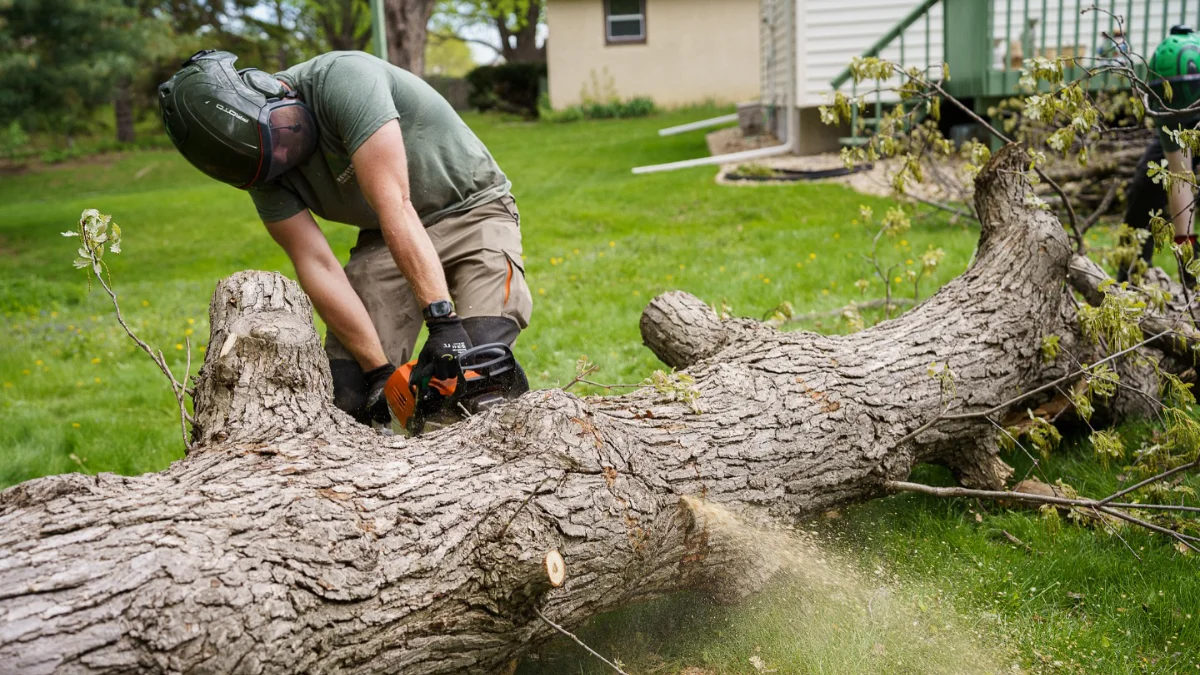
The line between safe cleanup and professional work is crossed when heavy wood and power tools are required. Operating a chainsaw is inherently dangerous, and doing so on storm debris amplifies the risk. Fallen branches are often under tension or compression. If you cut a branch that is bearing weight, it can snap back violently, causing severe injury.
If a fallen branch is too heavy to lift safely, or if it requires a chainsaw to dismantle, you should call a professional. Tree service crews are trained to read the tension in downed wood and use proper cutting techniques to dismantle heavy debris safely.
Structural Damage and Large Limb Removal
If a large branch or a portion of a tree has fallen onto your house, garage, car, or fence, professional fallen tree removal is mandatory. Attempting to pull or cut a heavy limb off a structure can cause the wood to shift unpredictably, resulting in further property damage or personal injury.
In these situations, an emergency tree service will use specialized rigging and potentially crane assistance to lift the weight of the branch safely away from the structure. An ISA Certified Arborist will also evaluate the remaining tree to determine if it is structurally sound or if complete removal is necessary to prevent future failures.
Start With a Safe Ground-Level Inspection
After a storm, slow down before beginning cleanup. Walk the property from a safe distance and look for loose branches overhead, cracked trunks, damaged utility lines, and trees leaning in a new direction. If the ground around a tree’s base is lifted or cracked, keep away from the area because the root system may be failing.
Pay attention to branches that appear caught in another tree or roofline. They may remain in place for hours or days, then fall when the wind changes or the supporting limb shifts. A ground-level inspection is enough to identify the need for professional help; you should never climb a tree or climb onto a roof to investigate storm damage.
Understand Why Fallen Wood Can Be Dangerous
Wood that has fallen during a storm is often under compression or tension. A branch pinned under another limb may store energy like a bent spring. When a cut is made in the wrong location, the wood can roll, swing, or snap without warning. This is one reason chainsaw injuries are common during post-storm cleanup.
Professional crews are trained to identify these pressure points and sequence cuts so the wood can be released in a controlled way. When branches are large, tangled, or near a structure, the safest choice is to leave them in place until a qualified team arrives.
Record the Damage Without Taking Risks
If the situation is safe, take photographs from the ground before debris is moved. Include the general area, the tree or branch involved, and any visible damage to structures. A short note about the date and storm can also be useful if you later need to discuss the event with your insurance provider or a tree professional.
Do not move debris simply to make it look better before you understand whether it is part of a larger structural issue. A limb on the ground may be connected to a damaged trunk or may be helping to support another broken section. Safety and documentation should come first.
Schedule a Follow-Up Tree Check
The branch that falls after a storm is not always the only concern. The remaining tree may have split bark, a torn branch collar, hidden cracks, or a weakened root system. A professional inspection can help determine whether the tree can be pruned and retained or whether the remaining structure poses an ongoing risk.
A follow-up assessment is particularly important for trees near homes, driveways, play spaces, and neighboring properties. It gives you a clear plan for the next steps and helps prevent a delayed failure during the next period of wind or rain.
Protect Your Yard While You Wait for Help
Once you have identified a hazardous limb or tree, keep the area clear and resist the urge to pull debris with a vehicle or rope. If possible, mark the hazard from a safe distance so family members, visitors, and delivery drivers do not walk into the work zone. Move vehicles only if doing so can be done without entering the risk area.
After a professional crew completes the urgent work, ask whether the remaining tree needs follow-up pruning or a later reinspection. A clear plan for the next few weeks can help you avoid another surprise and keep the property safe through the rest of the summer storm season.
Making the First Hours After a Storm Safer
After a storm, the first priority is to keep people away from unstable trees, hanging limbs, downed wires, and damaged structures. A branch that looks secure from the ground can still be under tension or partially detached. Avoid climbing, using a ladder, or cutting a large limb with a homeowner-grade saw when the branch is near a roof, fence, driveway, or utility line. Give the site room until the situation can be assessed safely.
Once the immediate area is secure, take clear photographs from a distance and note what has changed. Look for split unions, new cracks, uprooted soil, limbs resting on structures, and branches that are caught in the canopy. This record can help a qualified tree professional understand the condition of the tree and plan access before arriving. It can also make it easier to document the event for property records.
After urgent cleanup is complete, consider a broader inspection of the remaining tree. Storm damage can expose weak attachments, decay pockets, or clearance problems that were not obvious before the wind. For homeowners in White Bear Lake, Lino Lakes, and the northeast Twin Cities, a post-storm evaluation can turn a reactive cleanup into a practical maintenance plan that reduces the likelihood of another surprise during the next severe-weather event.
Frequently Asked Questions
1. What should I do with small fallen branches?
Small branches can be cut with hand tools and bundled for your local municipal yard waste pickup, or chipped for use as garden mulch.
2. Why are hanging branches called ‘widowmakers’?
They are called widowmakers because they are highly unpredictable and can fall silently and with lethal force at any time, making them extremely dangerous.
3. Can I use a chainsaw to cut up a large fallen limb?
If you are not professionally trained, using a chainsaw on storm debris is highly discouraged due to the unpredictable tension and compression forces in the wood.
4. Will my insurance cover the removal of fallen branches?
Homeowners insurance typically covers removal if the tree or branch caused structural damage to your home, but often does not cover cleanup if it simply fell in the yard.
5. Should I remove a fallen branch from my roof myself?
No. A branch on a roof may be under tension and can cause more damage if it shifts. Contact a qualified tree service and, if needed, your roofing or insurance professional for coordinated next steps.
6. Can a tree look healthy after a storm but still be dangerous?
Yes. Fresh cracks, internal splits, damaged roots, and broken branch attachments may not be obvious from a distance. If a large tree has been affected by a storm, a professional assessment can identify issues that are easy to miss.
Conclusion
Cleaning up after a summer storm requires caution and good judgment. While minor twigs and small branches are safe for homeowners to clear, heavy wood, hanging limbs, and anything involving power lines or structural damage requires expert handling. Prioritizing safety over speed ensures your property is restored without injury.
Ready to Protect Your Property?
Dealing with heavy storm debris or dangerous hanging branches? Do not take the risk. Renstrom Tree Service provides professional fallen tree removal and storm damage response across White Bear Lake, Lake Elmo, and the northeast metro. Contact us today for safe, efficient cleanup and expert tree assessment.