Case Study: Complex Multi-Tree Removal Cottonwood, Elm, and Buckthorn Clearing
- Renstrom Tree Service
- Northeast Twin Cities Metro
- High-Risk Tree Removal, Land Clearing

Introduction
Not every tree removal project is a single tree in a straightforward location. Some projects involve multiple trees of different species, sizes, and conditions, each presenting its own unique set of challenges. This case study details one such project: a complex, multi-tree removal that included a massive cottonwood, an elm, and extensive invasive buckthorn clearing, all on a single residential property in the northeast Twin Cities metro.
The homeowner came to Renstrom Tree Service with a clear vision of what they wanted done and a property that required a team with both the technical expertise to handle a massive cottonwood and the organizational capability to manage a multi-phase project efficiently. What they received exceeded their expectations on every level.
Project Summary
Location: Northeast Twin Cities Metro
Trees Removed: Cottonwood, Elm, Invasive Buckthorn
Service Provided: High-Risk Tree Removal, Land Clearing
Complexity: Multi-phase, simultaneous operation
Outcome: Full removal and clearing, complete cleanup, all client requests fulfilled
The Challenge: Three Very Different Removal Problems on One Property
The Cottonwood
Eastern cottonwoods are among the largest trees in the Upper Midwest. They grow rapidly, reach enormous sizes, and produce the characteristic cotton-like seeds that give them their name. They are also one of the most challenging trees to remove in a residential setting. Their sheer size means there is a massive volume of wood to process. Their wood is soft and can be unpredictable when cut under load. And their rapid growth often means they have established themselves in locations that make straightforward felling impossible.
The cottonwood on this property was a prime example. It was a large, mature specimen with a substantial trunk diameter and a sprawling canopy that extended over multiple areas of the yard. Dropping it in one piece was not an option. The removal required a systematic, top-down dismantling approach with careful rigging to control the descent of heavy sections.
The Elm
American elms are beautiful trees with a distinctive vase-shaped form that once made them one of the most popular street trees in the country. However, Dutch Elm Disease has decimated elm populations across North America, and many of the elms remaining in the Twin Cities metro are in various stages of decline. The elm on this property required removal, and while it was smaller than the cottonwood, it presented its own set of access and rigging challenges based on its location on the property.
The Buckthorn
Common buckthorn is one of the most problematic invasive species in Minnesota. It was introduced from Europe as an ornamental shrub and has since spread aggressively across the state, outcompeting native vegetation and altering the ecology of woodlands and natural areas. On this property, buckthorn had established itself extensively, creating a dense thicket that needed to be cleared to restore the health of the landscape.
Buckthorn clearing is labor-intensive work. The plants must be cut at the base and the stumps treated to prevent resprouting. The volume of brush generated by a dense buckthorn thicket is substantial and requires efficient processing to manage effectively.
The Assessment: Coordinating a Multi-Phase Operation
When the Renstrom team arrived for the initial assessment, the first task was to understand the full scope of the project and develop a logical sequence of operations. The cottonwood was the primary challenge and would require the most planning and the most careful execution. The elm and the buckthorn clearing would be managed in coordination with the cottonwood removal to maximize efficiency and minimize the time the crew spent on site.
Our ISA Certified Arborist walked the entire property with the homeowner, listening carefully to their priorities and concerns. The homeowner had specific requests about how certain areas of the property should be handled, and the team took detailed notes to ensure that every aspect of the work aligned with the homeowner’s vision.
The assessment identified the optimal rigging points for the cottonwood, the safest sequence of cuts to dismantle the canopy without impacting the surrounding structures, and the most efficient workflow for managing the elm and buckthorn clearing simultaneously.
- Dismantling an 88-foot red oak without damaging surrounding property.
- Operating efficiently in winter weather.
- Respecting the homeowner’s preferences and staying in communication the whole time.
“Absolutely the best tree service! I have used many tree services over the years and this service exceeded my expectations!! Gus is terrific and listen closely to what we wanted done and accomplished all of the work we wanted done! A Huge Thank You to Gus and his team!”
— Dan Martin, Google Review
Good to Know
Red oaks rank among Indiana’s tallest hardwoods. They can weigh several tons. Planning properly and using cranes plus rigging equipment? Essential for safe removal. Working with insured pros protects you from liability issues.
The Approach: Precision, Coordination, and Communication
With the assessment complete and the plan established, the crew moved into position. The removal proceeded from the top of the tree downward, systematically dismantling the canopy section by section.
Dismantling the Cottonwood
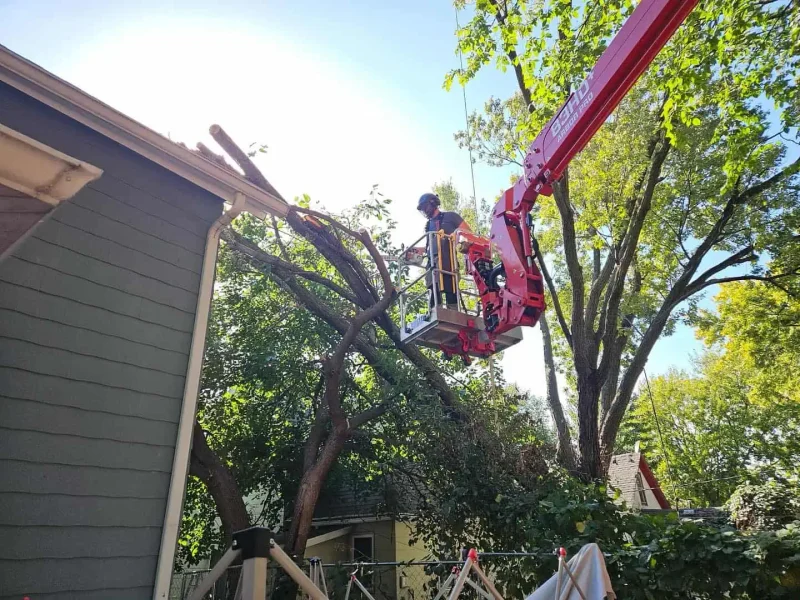
The cottonwood removal was the centerpiece of the project and required the full attention of the lead crew. Working from the top of the tree downward, the crew systematically removed the canopy section by section. Each cut was planned to direct the wood into a safe drop zone, and rigging was used to control the descent of heavier sections that could not be safely dropped free. The soft, heavy wood of the cottonwood required careful attention during cutting. The crew used specialized techniques to manage the unpredictable behavior of cottonwood under load, ensuring that each cut produced the expected result. The massive lower trunk sections were cut into manageable rounds and moved to the edge of the property for disposal.
Managing the Elm Simultaneously
While the lead crew focused on the cottonwood, a secondary crew began work on the elm. The elm’s location on the property allowed for a more straightforward removal approach, and the crew was able to process it efficiently while the cottonwood work continued. This parallel workflow was a key factor in the overall efficiency of the project, allowing both major trees to be addressed in a single day.
Buckthorn Clearing
The buckthorn clearing was the final phase of the project. Once the major tree work was complete, the crew turned their attention to the dense buckthorn thicket. The plants were cut at the base, the stumps were treated to prevent resprouting, and all of the brush was run through the chipper. The volume of material was substantial, but the crew worked systematically through the thicket, clearing it section by section until the area was completely open.
Dismantling the Cottonwood
The cottonwood removal was the centerpiece of the project and required the full attention of the lead crew. Working from the top of the tree downward, the crew systematically removed the canopy section by section. Each cut was planned to direct the wood into a safe drop zone, and rigging was used to control the descent of heavier sections that could not be safely dropped free.
The soft, heavy wood of the cottonwood required careful attention during cutting. The crew used specialized techniques to manage the unpredictable behavior of cottonwood under load, ensuring that each cut produced the expected result. The massive lower trunk sections were cut into manageable rounds and moved to the edge of the property for disposal.
Managing the Elm Simultaneously
While the lead crew focused on the cottonwood, a secondary crew began work on the elm. The elm’s location on the property allowed for a more straightforward removal approach, and the crew was able to process it efficiently while the cottonwood work continued. This parallel workflow was a key factor in the overall efficiency of the project, allowing both major trees to be addressed in a single day.
Buckthorn Clearing
The buckthorn clearing was the final phase of the project. Once the major tree work was complete, the crew turned their attention to the dense buckthorn thicket. The plants were cut at the base, the stumps were treated to prevent resprouting, and all of the brush was run through the chipper. The volume of material was substantial, but the crew worked systematically through the thicket, clearing it section by section until the area was completely open.
Did You Know
Oak trees in Indiana can live over a century and often reach heights of 80 to 90 feet. When they need removal, trained arborists use cranes to avoid damage and ensure safety.
Going Above and Beyond
One of the hallmarks of The Renstrom Standard is attention to detail and a willingness to go above and beyond the minimum scope of work when the situation calls for it. On this project, the crew identified several additional items that the homeowner had mentioned during the assessment but had not formally included in the scope of work. Rather than leaving these items for a follow-up visit, the crew addressed them during the project, ensuring that the homeowner’s full vision for the property was realized in a single visit.
This approach reflects the culture of Renstrom Tree Service: we listen carefully to what our clients want, and we do everything within our power to deliver it. We do not look for reasons to leave work undone; we look for opportunities to exceed expectations.
Our Frequently Asked Questions
1. Do you handle large tree removals safely?
We do. Certified arborists. Cranes. Rigging equipment. We’ve got everything needed for complex jobs.
2. Will you explain what you're doing during the project?
Definitely. We walk you through the process and honor your preferences the whole way.
3. Do you clean up completely after removal?
Every time. Stump ground. Debris chipped. Property left tidy.
The Result: A Transformed Property
When the crew finished and the final cleanup was complete, the transformation of the property was remarkable. The massive cottonwood and the elm were gone, opening up the yard and allowing light to reach areas that had been shaded for years. The buckthorn thicket had been completely cleared, revealing the natural landscape beneath and creating space for native vegetation to return.
The homeowner was thrilled with the outcome. The level of professionalism, the attention to detail, and the thoroughness of the cleanup all exceeded their expectations. The crew had listened carefully to their requests, addressed every item on their list, and left the property in better condition than they had found it.

What This Project Demonstrates About Renstrom Tree Service
This project illustrates several core strengths of Renstrom Tree Service. The ability to manage a complex, multi-phase project efficiently requires strong planning, clear communication, and a crew that can work in a coordinated manner across multiple simultaneous tasks. The technical expertise required to safely dismantle a massive cottonwood in a residential setting is not something every tree service can provide.
The project also demonstrates the value of listening to the client. The homeowner had a clear vision for their property, and the Renstrom team made it their mission to deliver that vision completely. This commitment to understanding and executing the client’s goals is at the heart of The Renstrom Standard.
Conclusion
If you have a complex tree removal project, multiple trees to address, or invasive species to clear, Renstrom Tree Service has the expertise, equipment, and team to handle it efficiently and professionally. We serve the entire northeast Twin Cities metro, including White Bear Lake, Lake Elmo, Stillwater, Roseville, and surrounding communities.
Service Areas
- White Bear Lake
- Lake Elmo
- Stillwater
- Roseville
- Entire northeast Twin Cities metro
- White Bear Lake
- Lake Elmo
- Stillwater
- Roseville
- Entire northeast Twin Cities metro